
HIGHLIGHTS
- Tech workers reportedly uncover hidden restructuring plans
- Internal tensions escalate after the discovery spreads
- Employees allegedly make a bold collective decision
- Story sparks debate about trust, ethics, and corporate secrecy
- Even now, when AI seems poised to replace all humans in business, leaving only managers and senior executives, reality shows that this world still revolves around humans. And those who forget this will eventually have much to regret.
- Even more so, given that this story begins long before the AI boom, when humans in IT were actually irreplaceable. Today’s narrator worked at a company whose management, one day, came up with a truly “brilliant”cost-optimization plan. However, nothing good came of it
- More info: Reddit
The battle for salary between employees and employers is as old as time, but the bosses sometimes need a reminder of who does the actual work

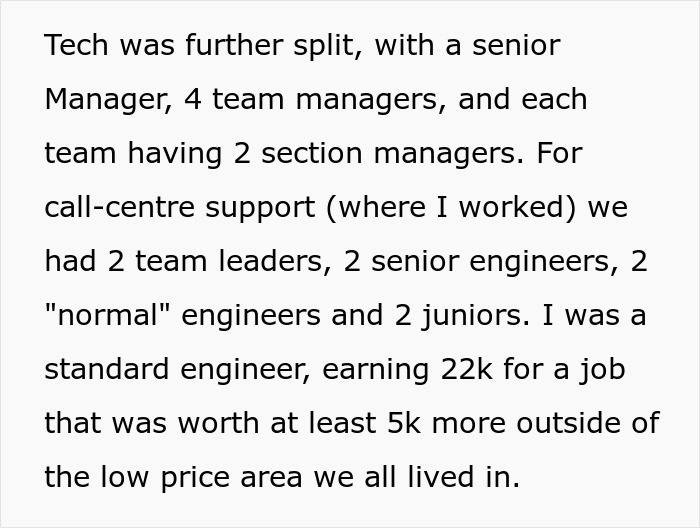
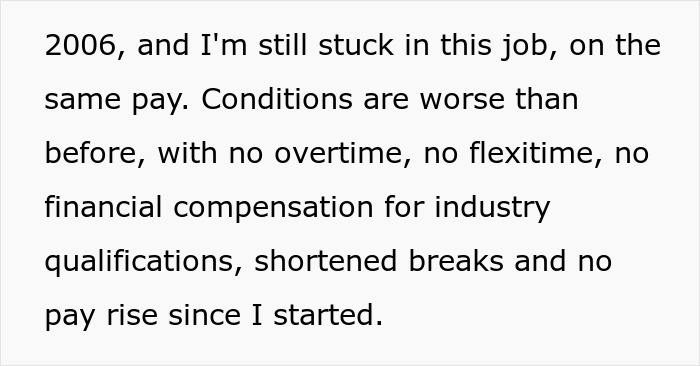
The author of the post worked for a tech company many years ago as a call center engineer, but never got a raise or promotion
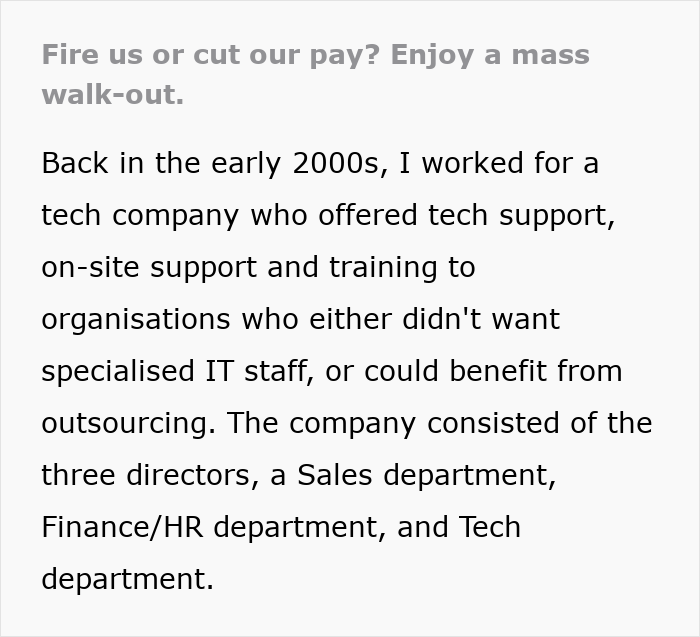

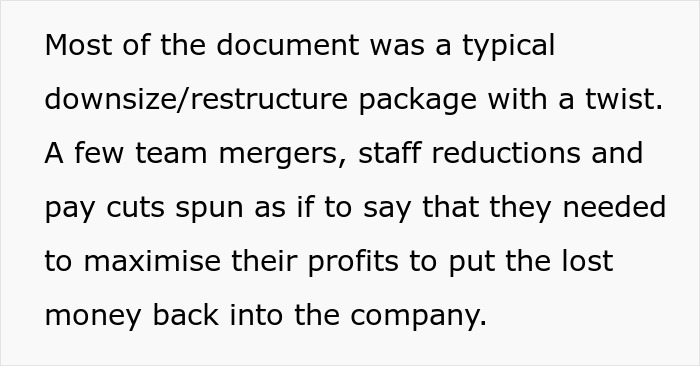
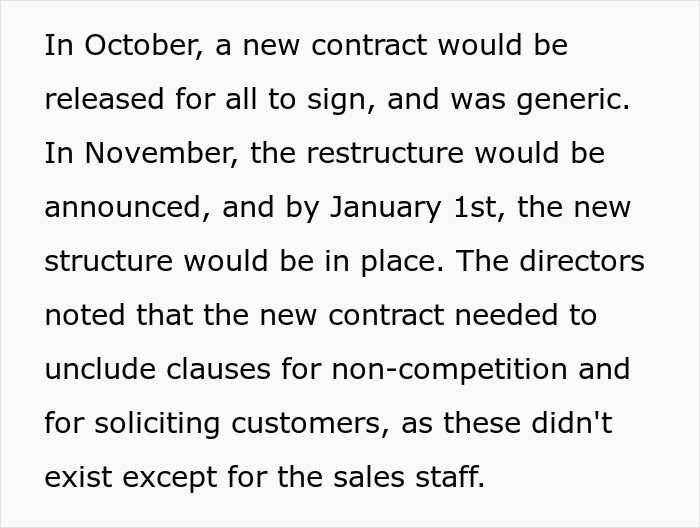
One day, a senior engineer found the management’s secret “salary restructuring” plan, in which nearly every employee had to face a pay cut

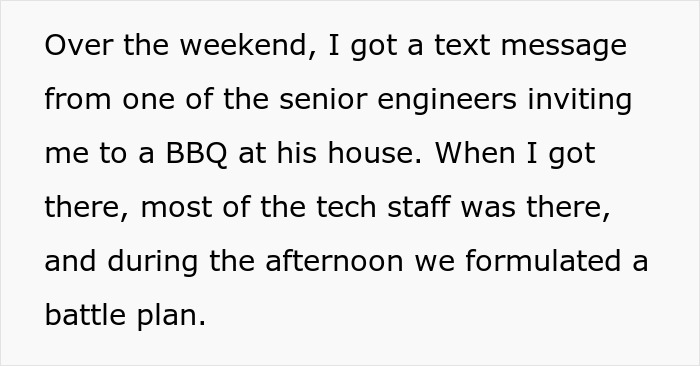
The tech guys then gathered for a barbecue and discussed the bosses’ mean plan, and possible options for themselves

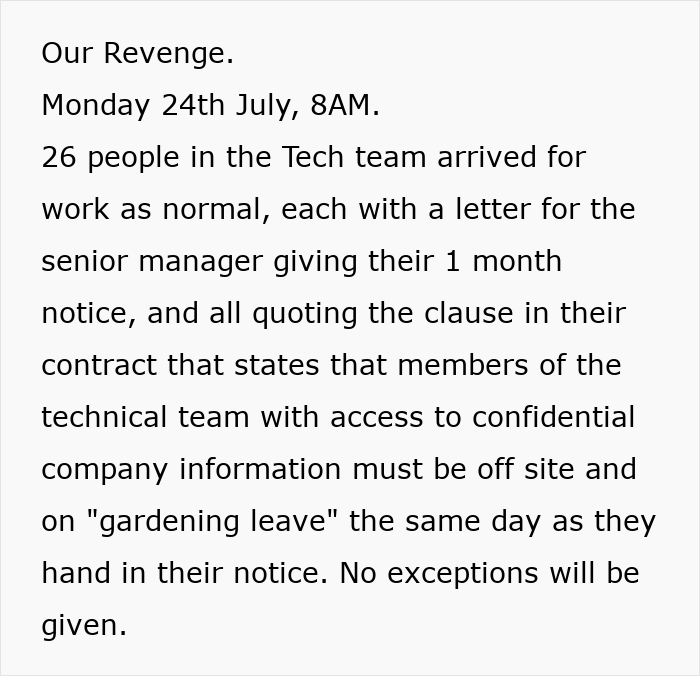
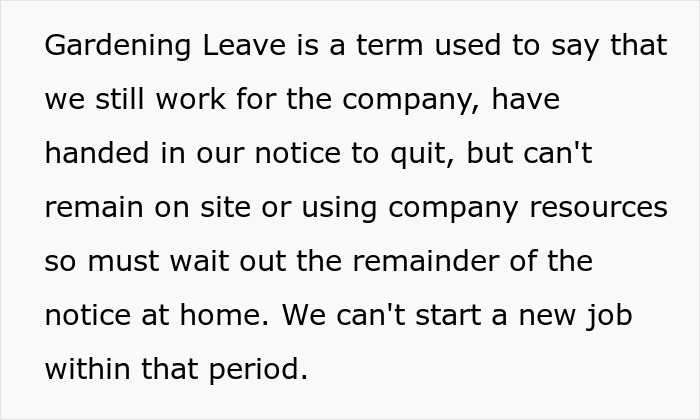
The very next day, 26 tech folks claimed they quit for “gardening leave,” meaning they walked out immediately
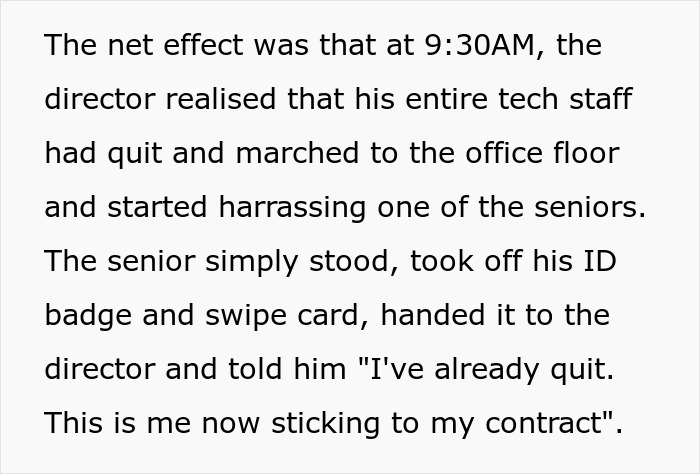
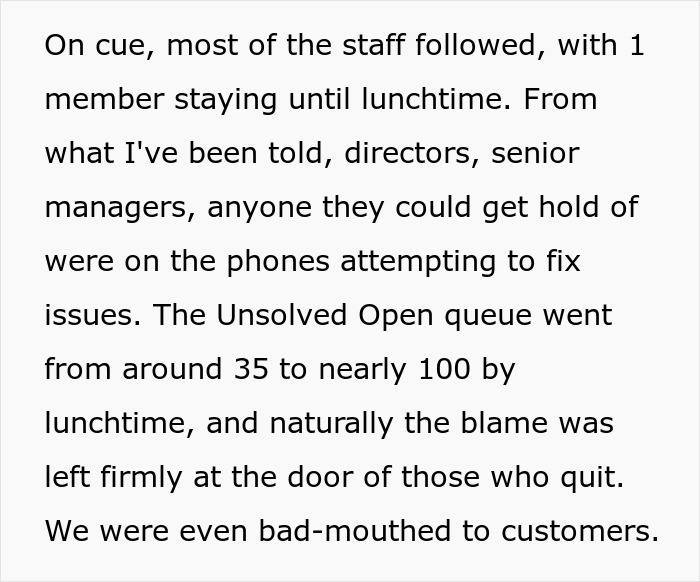

The higher-ups panicked and tried to fix everything, but to no avail
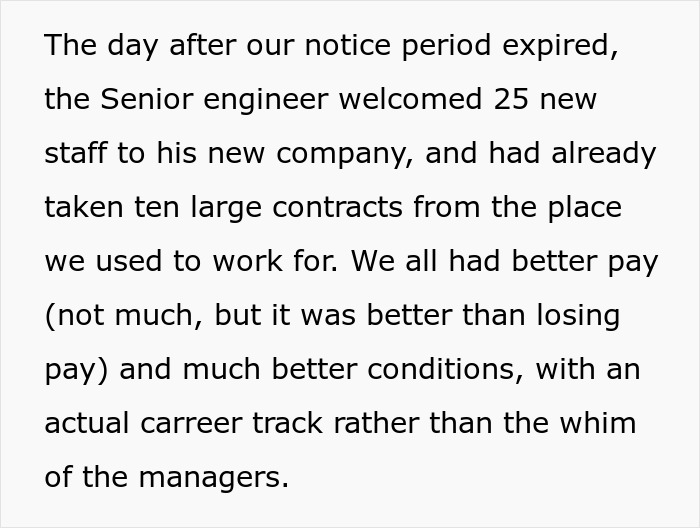
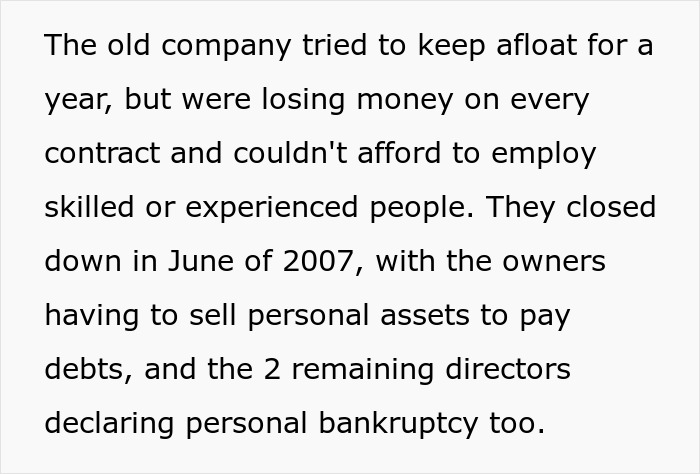
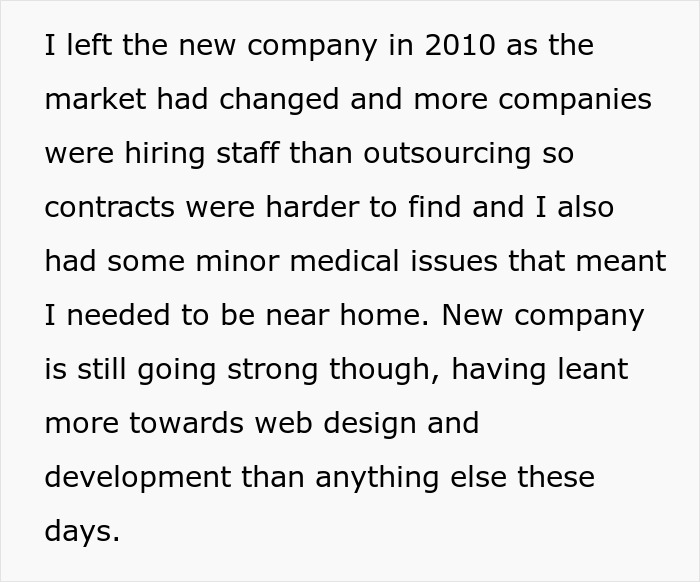
The senior engineer then founded his own company and hired almost all of his former colleagues, while their ex-employer went bankrupt soon after
The story we’ll tell you today happened almost a quarter of a century ago, when the original poster (OP) worked for a tech company that offered tech support, on-site support, and training for other companies without specialized IT staff. They were a call center engineer, but over several years of work, they couldn’t get a raise or promotion.At the same time, it’s not like the company was a nightmare to work for. It was just a typical outsourcing quagmire, the kind that plagued IT in those years. But one fine day, everything actually changed. This happened when one of the senior engineers discovered a secret company “restructuring” plan planned for the coming months.
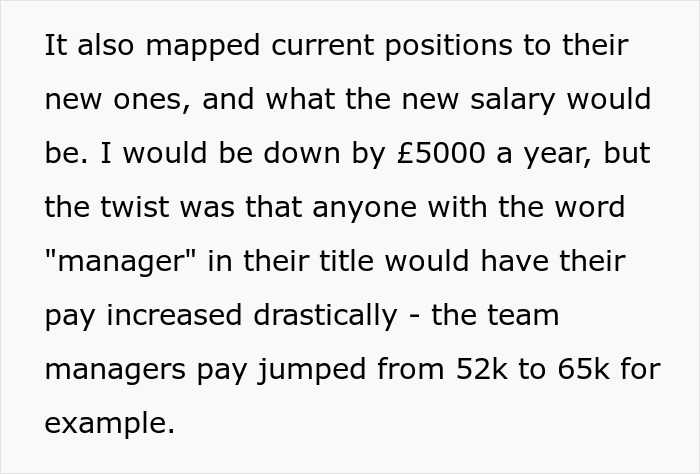
This plan called for the departure of one of the directors, a significant salary cut for everyone without the word “manager” in their job title, and, conversely, a salary increase for the higher-ups. Just a couple of days later, almost all the tech guys gathered at this guy’s place for barbecue, where they discussed the management’s plan and their possible response.
The plan was ready, and the very next day, 26 key technical employees simultaneously announced their immediate walkout. More precisely, they’d be “on gardening leave,” meaning handing in their notice but staying at home all that time. Panicked, the bosses tried to cope with this collapse, but, of course, they were unable to do anything.
The author recalls that the same senior manager soon founded his own company, where almost all the resigned employees, along with the original poster, joined. They worked there for several more years, quite successfully, and even received a modest salary raise. As for the old company, it went bankrupt soon after…

Well, the story of management and staff battling over wages was as relevant, say, a century ago as it is today. Except that in today’s world, the staff has more leverage over outcomes. True, employers’ tricks have also become more sophisticated. For example, back in 2014, a study by the Economic Policy Institute claimed that wage theft was a nationwide epidemic that cost American workers as much as $50B a year.Moreover, companies often prefer not simply to pressure wages through regular pay cuts, but through other, indirect mechanisms. Among them, this Reuters article cites a hiring slowdown, weaker employee bargaining power, and slower wage growth. As a result, the labor market “cools,” and employers find themselves in a winning position.So, in the situation we described, the employees were quite fortunate to have access to management’s “strategic plan” and be able to develop a timely response. In any case, as this dedicated Reuters article reasonably notes, collective confrontation with the employer is always more effective than an individual one. And our story only confirms this.
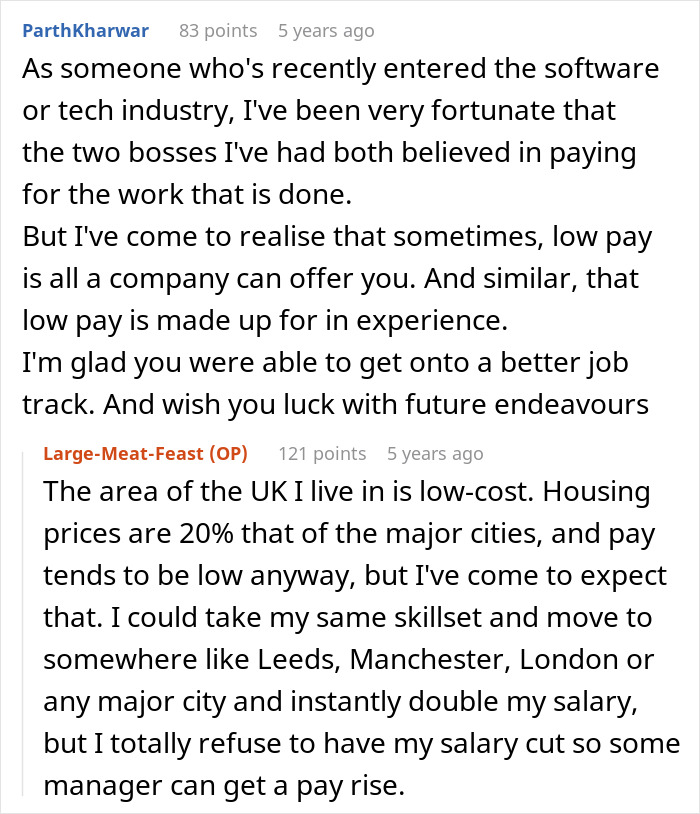
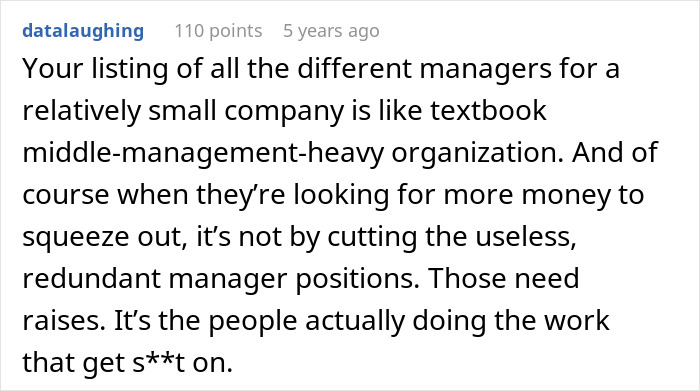
People in the comments also massively thanked the original poster for the interesting tale, noting that this is often the case when bosses try to s***w over employees. Management sometimes forgets who does the actual work, and in that case, it’s rather useful to remind them, some responders added. So, what’s your opinion, our dear readers, about this story? Please feel free to leave your comments below.
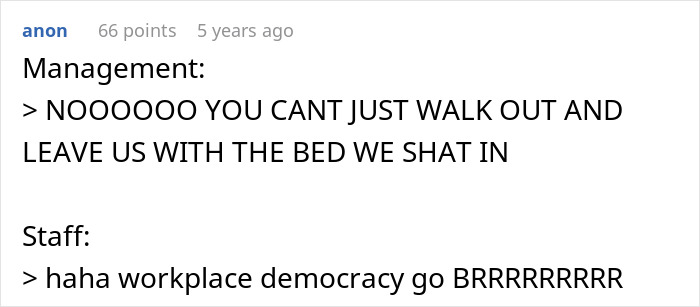
Many people in the comments simply gave the author a huge shoutout for such great corporate revenge





Conclusion
What was supposed to be a carefully planned company initiative quickly turned into a public relations nightmare when internal details leaked before management was ready. Leaders expected employees to quietly accept the changes, but they underestimated how strongly the tech team would react once the full plan became known.
Instead of staying silent, the team made a move that caught everyone by surprise. Whether driven by frustration, principle, or concern for the company’s future, their response shifted the conversation and forced management to address issues it may have preferred to avoid.
The incident serves as a powerful reminder that transparency, communication, and employee trust are essential in any organization. Even the most ambitious plans can backfire when the people responsible for implementing them feel ignored or excluded from the decision-making process.
In the end, the leak wasn’t what created the crisis—it simply exposed problems that had been building beneath the surface. Once those issues became impossible to ignore, the company was left with a choice: listen to its employees or face even greater consequences.
For more workplace stories, corporate drama, and thought-provoking discussions, visit
Sometimes the biggest threat to a company isn’t a leaked plan—it’s what employees decide to do after they discover it.