Highlights
- Off Campus presents masculinity in a different way by showing male characters who are emotionally aware and open with their feelings.
- The series challenges the common idea of emotionally distant men by showing that vulnerability can also be attractive.
- It also flips a common dating stereotype by showing a female character who is afraid of intimacy and commitment.

Source: FlixPix/Alamy
For many years, romantic stories have often followed the same pattern: an emotionally distant man and a woman who waits for him to open up. In these stories, the woman often changes herself to fit around his pain, excuses his hurtful behavior because of his difficult past, and tries hard to fix him. Male characters may be controlling, cold, or even cruel, but their behavior is often excused by giving them sad backstories, making their emotional distance seem deep and romantic instead of unhealthy.
The Prime Video series Off Campus, based on Off-Campus series by Elle Kennedy, offers a different view of masculinity. Set at Briar University and focused on a group of college hockey players and their relationships, the show presents male characters who are confident and attractive without making emotional distance seem appealing. Instead, some of the most powerful moments in the series come from vulnerability, empathy, and emotional understanding.
Off Campus is a strong example of what many people call soft masculinity. Its male characters show emotional awareness, openness, care, and the ability to build secure and healthy connections. These traits are often linked to stronger relationships and secure attachment.
Moving Beyond the Brooding Romantic Hero
One reason Off Campus feels different is that its male characters do not rely on emotional distance to create romantic tension.
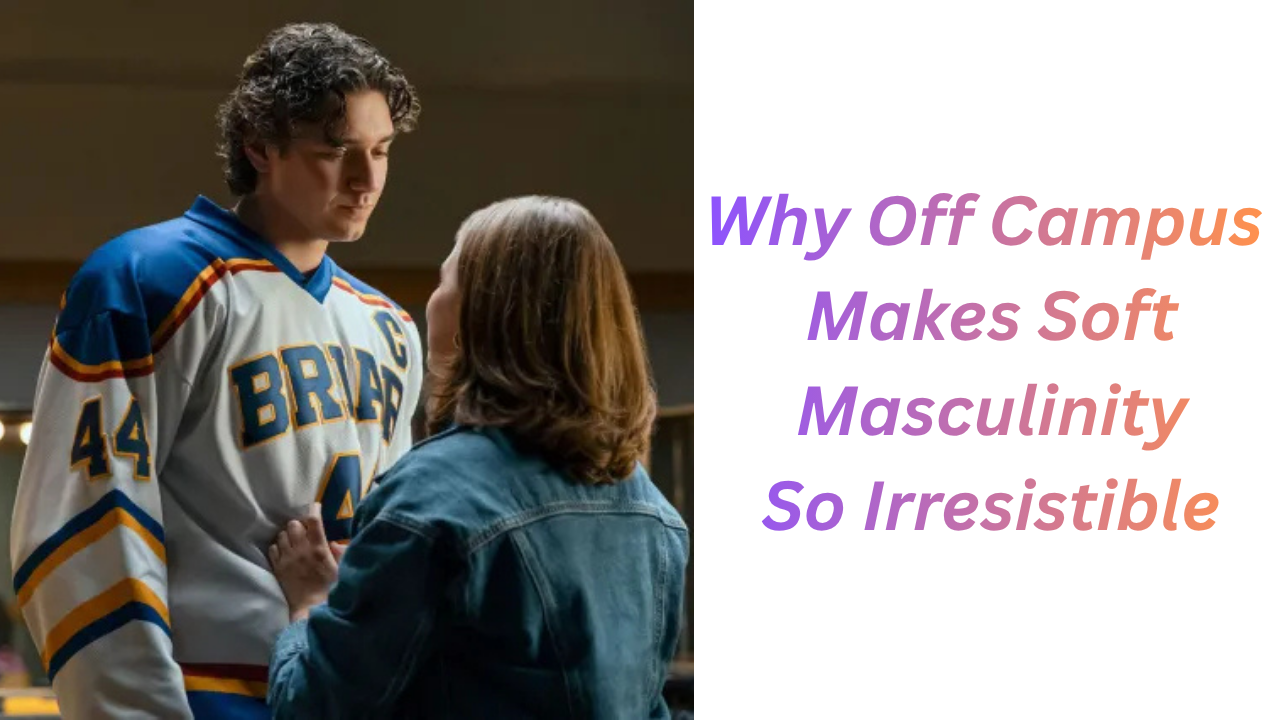
Garrett Graham, played by Belmont Cameli, first seems like the typical charming hockey star. He is confident, athletic, popular, and comfortable with himself. But as his relationship with Hannah Wells, played by Ella Bright, grows, what becomes most attractive is not his success in sports. It is his patience, empathy, and ability to make her feel safe and trusted.
When Hannah Wells tells Garrett Graham about her past sexual assault and her difficulty with intimacy, Garrett does not pressure her, try to “save” her, or make the situation about himself. Instead, he respects her boundaries and focuses on building trust at a pace that feels safe for her.
In many traditional romance stories, masculinity is linked to control or sexual conquest. Garrett offers a different example. His character shows that strength can also look like emotional awareness, patience, and genuine care.
Challenging Traditional Relationship Roles
Dean Di Laurentis, played by Stephen Kalyn, first appears to fit the familiar role of the commitment-avoiding playboy. He is charming, flirtatious, and used to keeping relationships casual. He often uses humor and charm to avoid deeper emotional closeness. At first, he seems like the typical romantic lead who does not want attachment.
But as his relationship with Allie Hayes, played by Mika Abdalla, develops, that pattern starts to change. Dean slowly begins to care deeply for Allie, while Allie becomes the one who is hesitant to define the relationship. She tries to keep things casual, enjoys their connection, but pulls away when the relationship starts to feel more serious and emotionally close.
This reverses a common romance pattern. Usually, stories show men avoiding commitment while women want emotional closeness and exclusivity. In Off Campus, Allie is the one who creates distance as her feelings grow.
Early in their relationship, Dean jokes that he is like a roller coaster, meaning he is not someone to count on for a serious long-term relationship. Because of that, Allie first decides not to see him as a serious romantic option since she wants something more secure. However, as Dean gradually falls in love with her, Allie becomes the one trying to stay in control, avoid getting too close, and stop the relationship from becoming more serious.
Instead of showing women as the ones who want commitment and men as the ones who avoid it, the adaptation focuses on how fears, attachment issues, and relationship struggles shape the story. In a more traditional romance, Dean Di Laurentis might have tried to win Allie Hayes through jealousy, control, or dramatic romantic gestures. Instead, his growth is shown through something different: he becomes more willing to communicate honestly, deal with uncertainty, and risk rejection in order to build real intimacy.
Why Emotionally Available Men Appeal to Viewers
The popularity of Off Campus may reflect a larger cultural change in how masculinity is viewed. For a long time, many boys have been taught that being a man means hiding emotions and carrying pain in silence. In Off Campus, the male characters do not become less masculine when they show vulnerability. In fact, the series suggests that emotional maturity, self-awareness, and empathy make them even more attractive.
As conversations about mental health, relationships, and gender continue to change, many viewers seem drawn to male characters who communicate clearly, care deeply about their partners, and take responsibility for their actions. The men in Off Campus are allowed to be strong, competitive, protective, and caring, but they are also allowed to feel unsure, hurt, insecure, and sensitive without being treated as weak or less masculine.
The show reflects a growing interest in relationships built on mutual respect, emotional safety, and real connection. It does not present perfect men or perfect women. Its characters make mistakes, struggle with insecurity, feel emotional pain, experience rejection, and deal with difficult relationship dynamics.
One reason Off Campus connects with so many viewers is that it challenges a long-standing romantic fantasy. By showing emotional awareness and emotional intelligence as attractive qualities, the series expands the idea of what masculinity can look like and what people may now want to see in modern romance.
References
Balan, D. (2023). Re-Write: A Trauma Workbook of Creative Writing and Recovery in Our New Normal. Routledge.
Balan, D. (2024). Confidently Chill: An Anxiety Workbook for New Adults. Routledge.
Balan, D. (in press). Body Business: Maintaining Mental Health and Autonomy for Athletes, Performers, and Models. Routledge.
Bowlby, J. (1988). A Secure Base: Parent-Child Attachment and Healthy Human Development. Basic Books.
Johnson, S. M. (2019). Attachment Theory in Practice: Emotionally Focused Therapy (EFT) with Individuals, Couples, and Families. Guilford Press.
Read more ; Wayibo Relationships