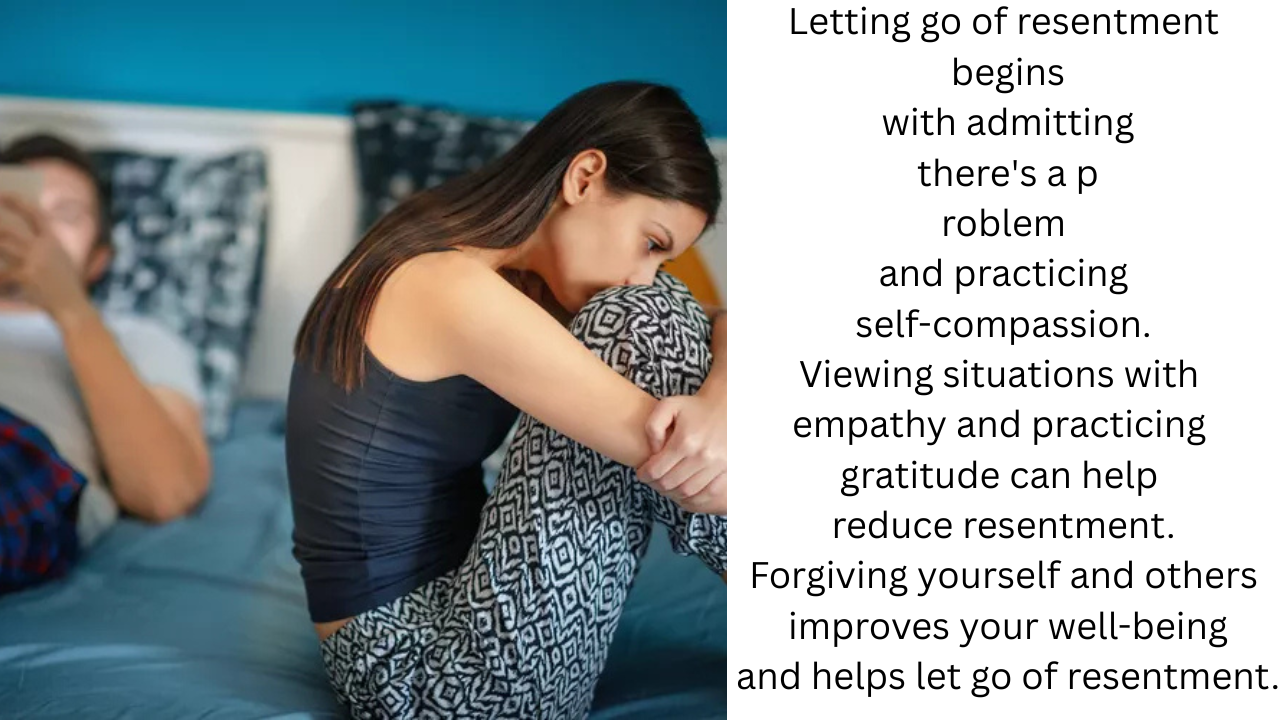
Letting go of resentment starts with recognizing that there is a problem and being kind to yourself. Looking at situations with understanding and focusing on what you are grateful for can help reduce resentment. Forgiving yourself and others can improve your well-being and help you let go of resentment.
Resentment is a feeling of anger and bitterness. These feelings can happen in relationships, but holding onto them for a long time can harm both the relationship and your physical and mental health.
When you hold onto resentment, you may start avoiding certain family members or act differently because of your anger. You might make rude or passive-aggressive comments, lose your temper, or do things to get back at them. No matter how it is shown, these feelings are not good for your well-being.
Letting go of resentment in a relationship often means trying to understand the other person’s point of view, focusing on gratitude, forgiving yourself and the other person, and understanding why you feel so resentful in the first place.
:max_bytes(150000):strip_icc():format(webp)/GettyImages-1205903534-3b8ff90912d046b6bcf4369df3e02d44.jpg)
Ways to Let Go of Resentment
The first step to letting go of resentment is accepting that there is a problem. Once you recognize it, you can start dealing with it by changing the way you think about the situation, how you see it, and how you respond to it emotionally.
- Practice self-compassion. Resentment may have helped you cope for a short time, but it is important to be kind to yourself. You are human, and everyone makes mistakes.
- Try to see the situation with empathy. When you look at things from the other person’s point of view, you may understand the situation differently.
- Focus on gratitude. Gratitude can make you feel happier. For example, if you feel jealous because a coworker received a special award, being grateful can help you respond in a more positive and healthy way.
- Forgive yourself and others. Letting go of resentment can be difficult, but accepting what happened can improve your well-being and give you a greater sense of peace and purpose.
- Think about where the resentment comes from. If the problem can be addressed, try having an honest and respectful conversation about your needs, boundaries, and concerns. If the situation is beyond your control, recognize the feelings it causes, such as sadness or anger, then work on accepting the situation and focus on what you can control after processing those emotions.
What If You Still Feel Angry?
Letting go of resentment is not always easy. It often requires changing the negative ways of thinking that helped create those feelings in the first place. If resentment is affecting your life and you find it hard to move on, talking to a mental health professional may help. Some approaches that can be helpful include:
- Anger management therapy: There are different ways to manage anger. These methods can help you avoid situations that trigger anger, improve self-control, and learn healthier ways to cope.
- Cognitive behavioral therapy (CBT): Anger can seriously affect a person’s life, but research shows that CBT can be an effective treatment. CBT helps people identify and change negative thought patterns and behaviors.
- Relationship counseling: If you are still struggling, couples or relationship counseling may help. You can choose traditional face-to-face therapy or work with a therapist online.
Why You May Feel Resentment in a Relationship
Many things can cause this complicated emotion. Resentment often happens when you feel that someone has treated you unfairly, taken advantage of you, or not listened to you. It is usually described as a feeling of bitterness or unfairness.
Unfortunately, resentment can lead to other harmful thoughts and emotions. If it is not dealt with, it can slowly damage a relationship.
Resentment can be caused by:
Resentment can come from:
- Jealousy
- Betrayal
- Embarrassment
- Shame
- Trauma
- Expressing your needs but feeling that they are not being met
- Not expressing your needs and then feeling upset when they are not met
- Not recognizing or setting personal boundaries and then having those boundaries crossed
- Clearly communicating your boundaries and having them ignored
- Expecting someone to know what you need without being told, then feeling hurt or angry when they do not
In romantic relationships, especially long-term ones, resentment can grow when one partner feels that responsibilities are not shared fairly. For example, one person may feel they have to manage work, household tasks, and childcare while their partner mainly focuses on their job.
Resentment can also develop when one partner always initiates physical intimacy and the other never does. It can also happen when one partner becomes a caregiver because of the other person’s health problems. If the caregiver’s own needs are continually ignored, they may start to feel resentful, which can create problems in the relationship.
One study looked at how relationship tension affected people during the first 16 years of marriage. Researchers described tension as feelings of irritation, resentment, and disappointment about the relationship.
The findings suggest that relationships are not only harmed by open arguments. Negative feelings that remain unspoken can also be very damaging.
Because tension plays a significant role in the well-being of the marriage, it’s important for interventions to look at both partners’ tension levels and how they handle tension to determine the couple’s relationship functioning.
How to Know If You Are Holding Onto Resentment
It can be difficult to recognize resentment because it is a complex emotion that often includes several different feelings at the same time. In general, a person who feels resentful believes they have been treated unfairly. They may:
- Feel tense when they are around the person they believe hurt them
- Avoid dealing with conflicts involving that person
- Keep thinking about the situation over and over and find it hard to let go
- Speak negatively about the person when they are not around
- Refuse to admit they are upset or avoid talking about the issue
- Distance themselves emotionally and physically from the person they resent
- Show passive-aggressive behavior instead of openly expressing their feelings
Feelings that may contribute to or be signs of resentment include:
- Sadness
- Disappointment
- Frustration
- Hostility, anger, or hurt feelings
- Bitterness
- Fear
- Blaming others or blaming yourself
- Guilt
- Regret
- Feeling that the relationship is one-sided
Can Resentment Ever Be Helpful?
Can Resentment Ever Be Helpful?
It may seem surprising, but a person who feels resentful can sometimes feel that there are benefits to holding onto those feelings. Here are some reasons why it might feel easier to keep resentment instead of dealing with it.
Resentment can help you:
- Protect yourself and avoid being hurt again
- Feel safer by avoiding vulnerability
- Maintain your sense of self-worth
- Feel a sense of control or power
- Avoid facing deeper problems in yourself, the other person, or the relationship
- Avoid difficult conversations and conflict
- Avoid taking responsibility or deciding what to do next
Even though holding onto resentment may feel easier at times, it can eventually harm your well-being and your relationships if it is not addressed through healthy communication. It is not an effective way to handle conflict or move forward in a relationship.
How Resentment Can Slowly Damage a Relationship
If you keep holding grudges and thinking about past hurts, the anger can affect your mental health. Without honest communication or problem-solving, you may remain stuck in negative feelings toward the other person.
Negative Effects of Resentment
Anger has been linked to several negative health effects, including:
- Heart and cardiovascular problems
- Depression
- Long-term stress
- Difficulty managing emotions
- Anxiety
Ongoing resentment in a relationship can create distance between you and the other person. If you try to talk about the issue and your partner refuses to engage, you may shut down emotionally again. This can lead to feelings of loneliness, withdrawal, and disconnection. In some cases, it can even end the relationship.
If you do not have the chance to talk openly with a trusted friend, family member, or mental health professional about your feelings, the situation may become worse. Without support, it can be harder to express your emotions, gain a different perspective, and begin healing.