
HIGHLIGHTS
- Why human connection is essential for emotional well-being
- The impact of relationships on happiness and mental health
- How strong bonds shape your identity and decisions
- The hidden cost of disconnection
Love is one of the most profound emotions known to human beings. There are many kinds of love, but many people seek its expression in a romantic relationship with a compatible partner (or partners). For these individuals, romantic relationships comprise one of the most meaningful aspects of life, and are a source of deep fulfillment.

While need for human connection appears to be innate, the ability to form healthy, loving relationships is learned. Some evidence suggests that the ability to form a stable relationship starts to form in infancy, in a child’s earliest experiences with a caregiver who reliably meets the infant’s needs for food, care, warmth, protection, stimulation, and social contact. Such relationships are not destiny, but they are theorized to establish deeply ingrained patterns of relating to others. The end of a relationship, however, is often a source of great psychological anguish.

How to Build a Healthy Relationship

Maintaining a strong relationship requires constant care and communication, and certain traits have been shown to be especially important for fostering healthy relationships. Each individual should, for starters, feel confident that their partner is willing to devote time and attention to the other. They must both also be committed to accommodating their differences, even as those change over time.
In the 21st century, good relationships are generally marked by emotional and physical fairness, particularly in the distribution of chores necessary to maintain a household. Partners in strong relationships also feel grateful for one another, openly provide and receive affection, and engage in honest discussions about sex.
In good relationships, partners try to afford their partner the benefit of the doubt, which creates a sense of being on the same team. This feeling, maintained over the long term, can help couples overcome the challenges they will inevitably face together.

How to Find Love

Finding a partner with whom to share a life is a wonderful but frequently difficult process. Whether it’s conducted online or in-person, the search will likely push an individual into unfamiliar settings to encounter potential partners. To be successful, it is often necessary to go outside of one’s comfort zone.
Determining whether a particular person is suitable as a potential mate, and whether a connection reflects temporary infatuation or true love, can challenging, but research suggests that there are revealing clues in behavior.
One possibly counterintuitive indicator of a potential match is one’s sense of self. Someone who would make a good partner may push an individual to discover new activities or beliefs that expand their own self-concept. Another early signifier may be stress: Repeatedly interacting with someone whose impression matters deeply to us can fuel anxiety. Other positive indicators include being highly motivated to see the person and investing a significant amount of time, emotion, and energy into the budding relationship.

How Relationships Fail

Every relationship represents a leap of faith for at least one partner, and even in the happiest couples, the very traits that once attracted them to each other can eventually become annoyances that drive them apart. Acquiring the skills to make a connection last is hard work, and threats may spring up without notice. In short-term, casual relationships, neither partner may see a truly viable long-term future together, but often only one takes action, in some cases ghosting the other, walking out of their lives with no communication, not even a text. For some couples, infidelity is both the first and last straw, but a surprising number of relationships survive betrayal, some only to have their connection upended by everyday threats such as a loss of interest in physical intimacy, or a waning of positive feeling in the wake of constant criticism, contempt, or defensiveness. Even staying together for decades is no guarantee that a couple will remain connected: The divorce rate for couples over 50 has doubled since 1990. Some people can walk away from years of marriage and instantly feel unburdened. For others, the end of a relationship that lasted just a few dates can trigger emotional trauma that lingers for years. However a breakup plays out, it can be a major stressor with an effect on ego and self-esteem that cannot be ignored.
The Long-Term Benefits of Strong Relationships
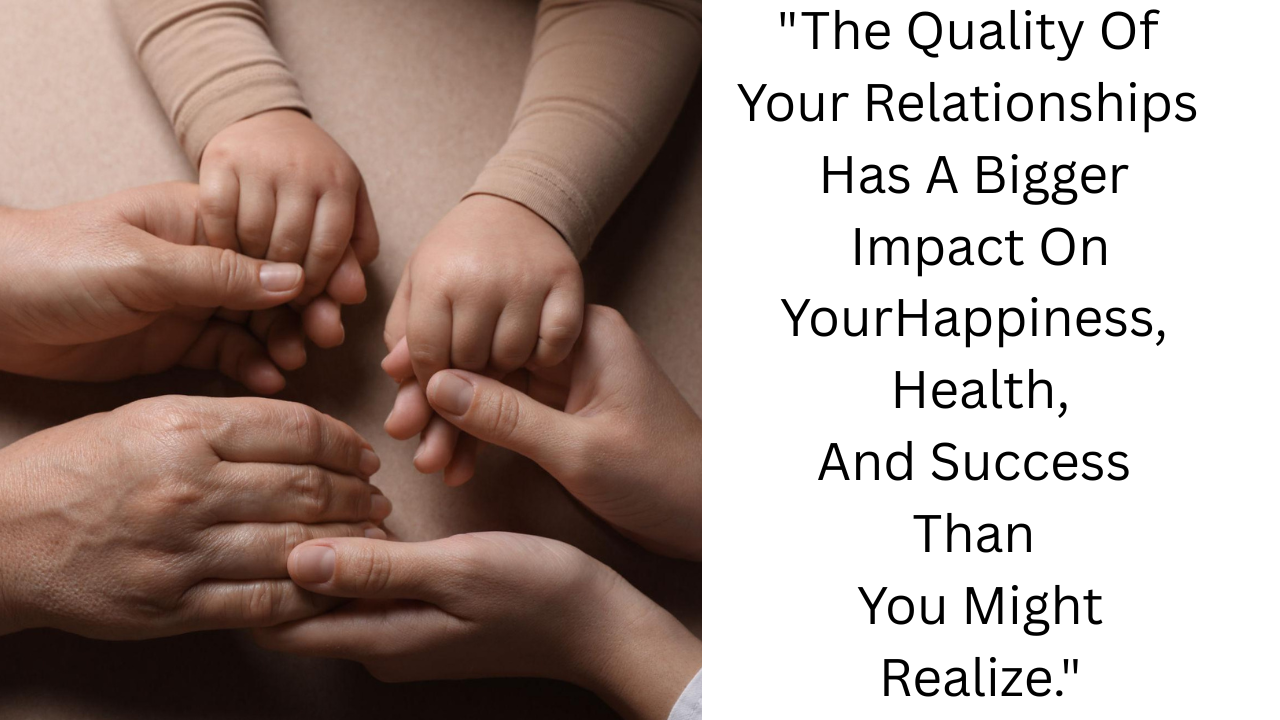
Research consistently shows that strong relationships contribute to better mental health, lower stress levels, and greater overall life satisfaction. People with supportive social connections often cope better with challenges, recover more quickly from setbacks, and report higher levels of happiness. Healthy relationships provide emotional security, encouragement, and a sense of belonging that can positively influence every aspect of life. While career success and financial stability are important, meaningful human connections remain one of the strongest predictors of long-term well-being and fulfillment.
Final Thoughts
Relationships influence nearly every part of life, from emotional well-being and personal growth to resilience during difficult times. While achievements and possessions may change over time, meaningful connections often leave the deepest impact. Investing in healthy, supportive relationships is one of the most valuable things a person can do—not only for happiness today, but for a more fulfilling future.