HIGHLIGHTS
- A breakup caused by betrayal turns into a parenting dilemma
- Boundaries vs. “moving on” conflict
- Emotional tension between co-parenting and trust
- A decision that divides opinions

This story A realistic indoor scene: a woman in her early 30s standing in a softly lit living room, arms crossed, expression conflicted but firm. In the blurred background, two kids are playing on the floor while a man stands near the doorway, slightly out of focus. Natural window light, neutral tones, authentic emotions—no dramatic exaggeration.
He Cheated… Now He Wants His New Partner Around My Kids — I Said No. Am I Wrong?

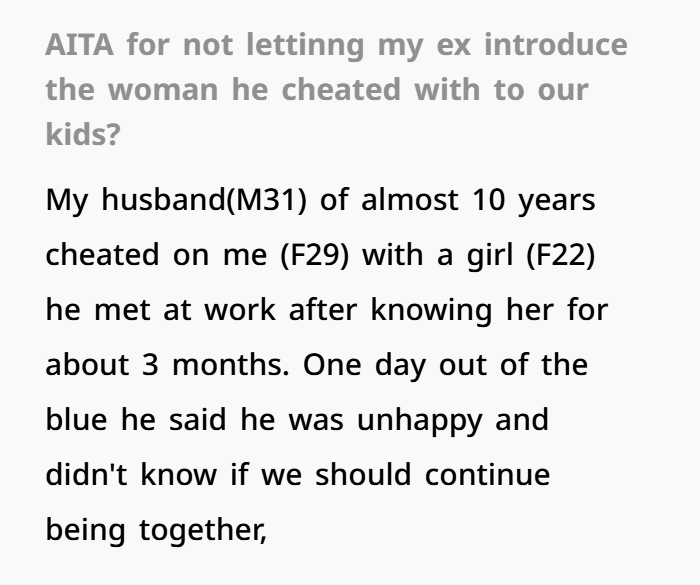
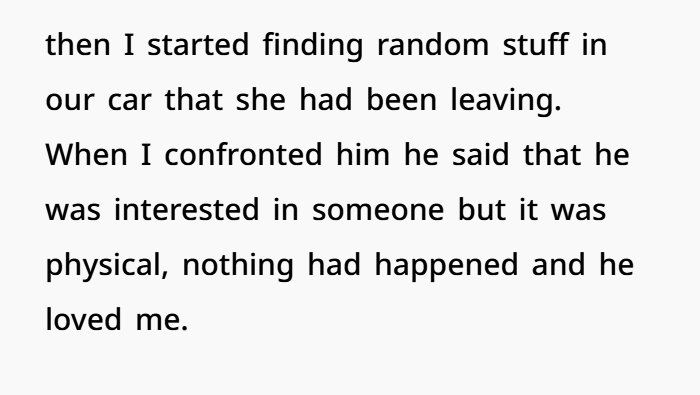
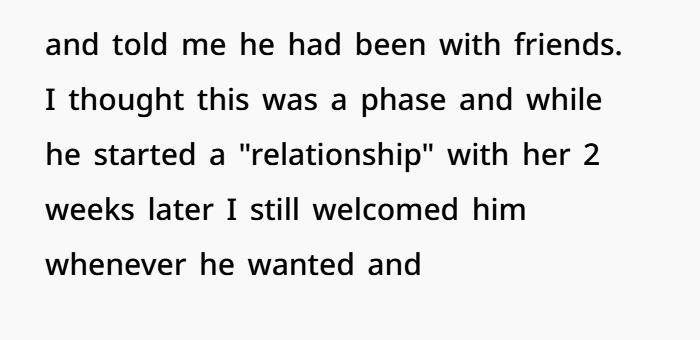
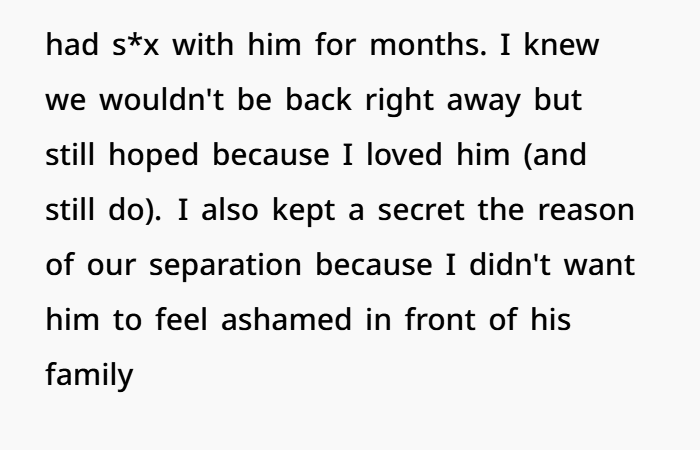
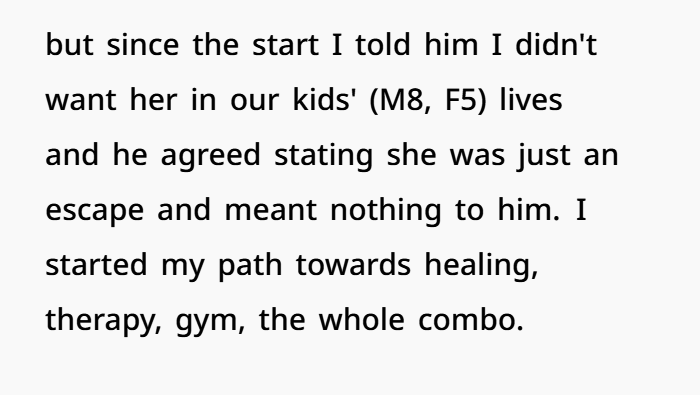
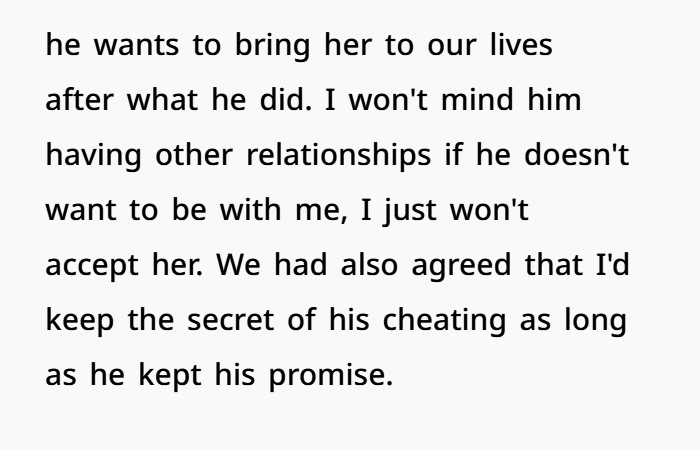
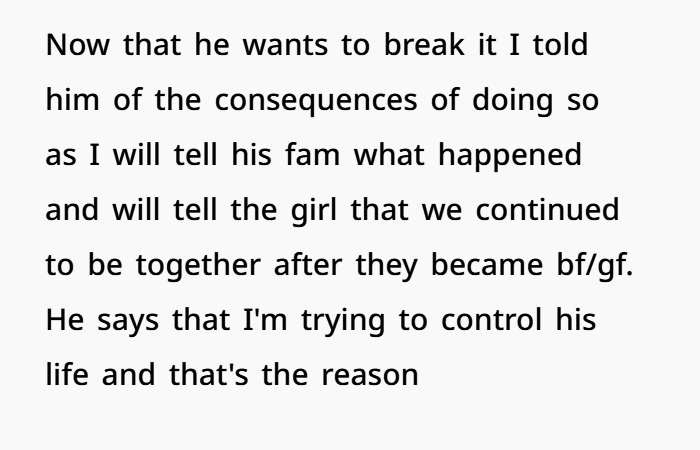
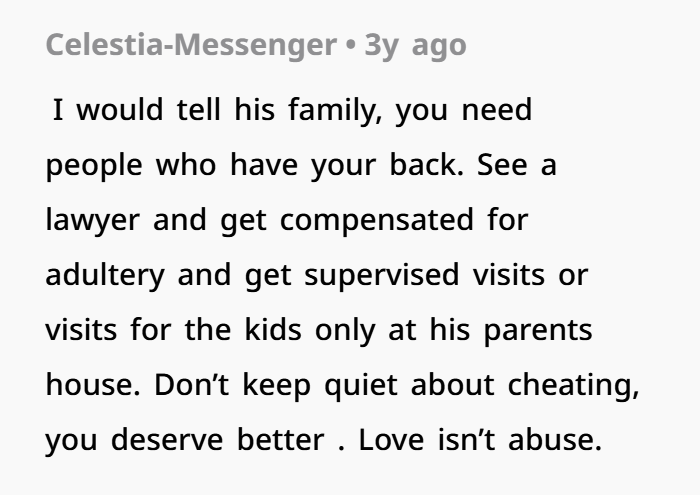
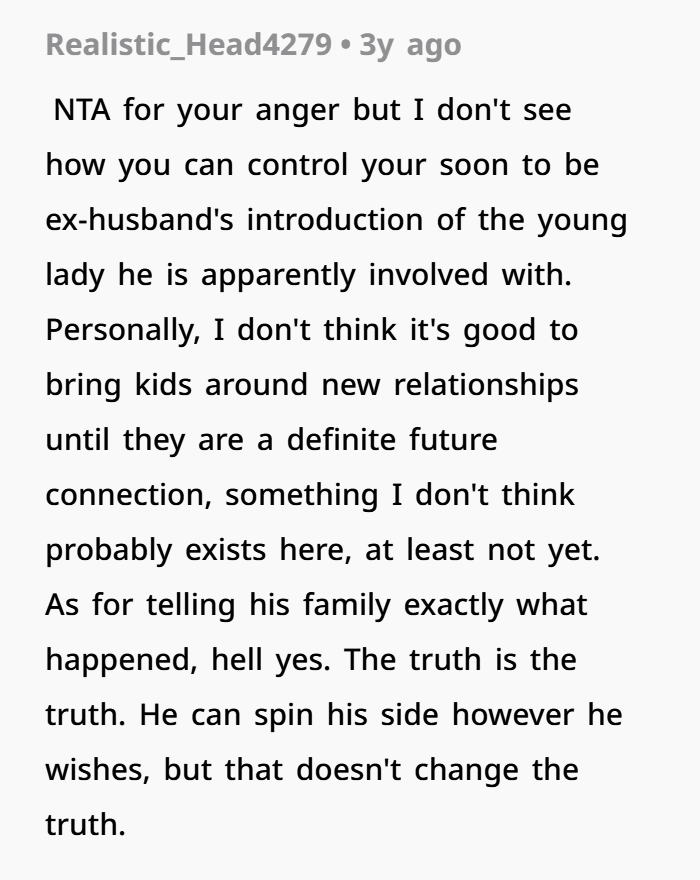
I didn’t expect betrayal to feel this quiet, but the day I found out he was cheating, something inside me shut down in a way I can’t fully explain—no shouting, no dramatic ending, just a cold clarity that what we had was over; what I didn’t expect, though, was how quickly he would move on, how easily he would try to rewrite everything as if the damage didn’t matter, and now, just months later, he stands there asking—no, expecting—that I allow the same woman who played a role in breaking our home to step into my children’s lives like it’s normal, like it’s harmless, like time alone erases betrayal, but to me this isn’t about jealousy or bitterness the way everyone keeps saying, it’s about trust, stability, and the emotional safety of my kids who are still trying to understand why their world changed in the first place, and I refuse to pretend that introducing someone new this quickly—someone tied to that pain—won’t affect them, so I said no, calmly but firmly, even as the pressure started building from every direction, even as I was labeled difficult, controlling, and unable to move on, because at the end of the day, I’m not responsible for making his new life comfortable—I’m responsible for protecting the pieces of the old one that still matter.


Let’s unpack this, because there’s a lot going on here—emotionally, legally, and mentally. And if you’ve been searching stuff like “co-parenting after infidelity,” “introducing a new partner to kids after divorce,” or even “emotional effects of cheating on family,” yeah… this situation covers all of that in a real way.
First, the cheating. Infidelity in a long-term marriage, especially with kids, isn’t just between two people. It affects the whole family system. You’re not just breaking trust—you’re shaking the entire home. A lot of family therapy research shows betrayal can damage emotional stability, not just for partners but for kids too. Even if children don’t know the full story, they feel it. The tension, the silence, the weird energy. That stuff sticks. It’s not just a “relationship problem,” it becomes a family issue.
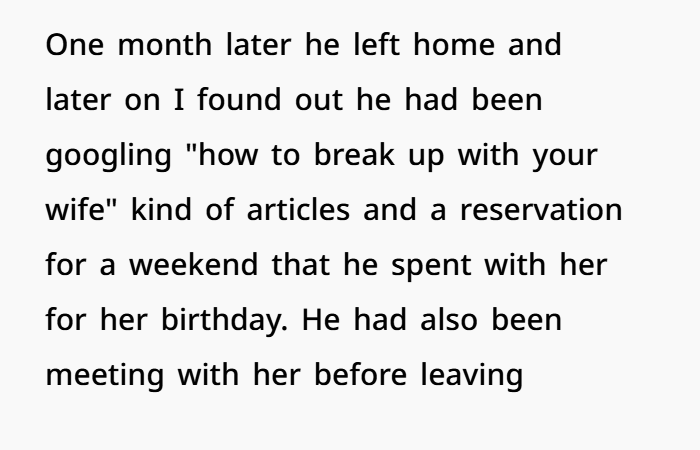
Now in this case, it wasn’t just cheating and confessing. He lied, planned things out, and lived a double life. That matters. Because it shows a pattern, not a one-time mistake. And when you start looking at things like custody laws or even talking to a divorce lawyer, patterns of behavior can actually play a role. It raises questions about honesty, judgment, and long-term trust—not just as a partner, but as a parent too.
Then there’s the other woman. She knew he was married. She even met the wife. And still chose to continue. That doesn’t automatically mean she’s unsafe—but yeah, it does raise concerns about boundaries and decision-making. And when kids are involved, parents naturally get protective. That’s not being controlling. That’s just basic parenting instinct. You want to know who’s around your kids and what kind of influence they bring.
Now the big question: can one parent control who the other parent introduces to the kids?
Legally, in most custody agreements or co-parenting setups, unless there’s a clear court order, each parent has freedom during their parenting time. So technically, yes—he can introduce someone new. But here’s the thing. Family law experts and child psychologists usually recommend waiting. Like a stability period. Around 6 to 12 months. Why? Because kids get attached fast. And if people keep coming and going, it messes with their sense of security. It’s not just about dating—it’s about emotional safety.
And this is where it gets complicated. This isn’t just some random new relationship. This is the person connected to the breakup of the family. That adds a whole different emotional weight. It’s not neutral. It’s loaded.
From a psychological standpoint, introducing that specific person too soon can:
- Create confusion for the kids (“Why is this person here?”)
- Undermine the co-parenting relationship
- Cause resentment and emotional distress, even if they don’t fully understand why
You’re not wrong for wanting to protect your kids from that.
Now let’s address your side—because there are layers here too.
ADVERTISEMENT
So you had an agreement. You’d keep his cheating private, and in return, he’d respect your one clear boundary. That wasn’t about covering for him. It was about protecting your kids—from gossip, awkward questions, and unnecessary drama. Honestly, that’s something a lot of parents try to do after a breakup. Keep things calm. Keep things stable.
But now he’s not holding up his side.
Which brings up the big question—are you wrong for telling the truth now?
This is where it gets complicated. It’s like a mix of ethics, emotions, and even legal strategy. On one hand, you absolutely have the right to share your story. You don’t owe loyalty or silence to someone who broke your trust. That silence came with conditions. And he’s the one who broke them.
On the other hand, if the truth turns into a tool—or leverage—it can escalate things fast. Co-parenting can shift from manageable to stressful real quick. And if things ever involve legal advice, divorce lawyers, or custody arrangements, high-conflict behavior can make everything harder. Courts usually focus on creating a stable, low-conflict space for kids. Even when your feelings are valid, how things look on paper can matter.
But honestly, this isn’t a simple “right or wrong” situation.
You’re not doing this just to get back at him. You’re responding to a broken promise that affects your children directly. That context changes everything.
Also, your healing journey matters here. Therapy, working out, trying to move forward—that’s all positive. But being physically involved with him while he was already building another relationship? That made things messy emotionally. It kept you connected when he was already moving on. And now that he’s fully committed elsewhere, it hits harder. That emotional disconnect… yeah, it can feel like a shock to the system.
That pain? It’s valid.
But decisions made from that pain can sometimes backfire. Not morally—but practically.
So what are your real options here?
- Hold the boundary calmly, without threats.
You can say: “I’m not comfortable with her being around the kids right now. If you move forward anyway, I’ll need to revisit how we communicate and co-parent.” Keep it firm, not explosive. - Seek a formal co-parenting agreement.
This is where legal guidance helps. Some custody agreements include clauses about introducing new partners. It gives structure, not just emotional arguments. - Tell the truth—but own the reason.
If you do decide to tell his family, do it because you’re done carrying the burden—not just as a reaction to him. That shift in intention changes how it lands, both for you and everyone else. - Protect your kids emotionally, not just physically.
Even if they eventually meet her, what matters most is how stable and safe they feel with you. Kids take emotional cues from the parent they feel most grounded with.
At the heart of all this, your instinct isn’t wrong. You’re trying to protect your kids and hold onto some dignity after being hurt deeply. The only real risk is how the situation escalates from here.
Because once things turn into power struggles, nobody really wins—especially not the kids.

See The Comments Below



After he cheated, he introduced his new partner into their children’s lives—but she refused. Now everyone is questioning her decision.
The Betrayal That Changed Everything
She didn’t see it coming.
Or maybe she did… and just didn’t want to believe it.
Years of trust ended in a single moment—the moment she found out he was cheating.
Not just emotionally.
Fully.
And just like that, the life they built together cracked beyond repair.
Discovery: Moving On… Too Fast?
The separation was painful, but she stayed focused.
On healing.
On stability.
On her kids.
But only a few months later, he introduced someone new.
Not quietly.
Not carefully.
Suddenly, this new woman wasn’t just part of his life…
He wanted her to be part of the kids’ lives too.
That’s when everything shifted again.
Conflict: “You Need to Accept This”
He said it was time to move forward.
That she was being “difficult.”
That the kids needed to “adjust.”
But to her, it didn’t feel that simple.
This wasn’t just about moving on.
This was the person who helped break their family.
And now she was supposed to welcome her?
Around her children?
She said no.
Firmly.
The Pressure Starts Building
That’s when the opinions came.
From him.
From mutual friends.
Even from his family.
“You can’t control his life.”
“You’re being unfair.”
“The kids will be fine.”
But no one asked her one thing:
What does this feel like for you?
Ending: Drawing a Line
She didn’t scream.
She didn’t fight endlessly.
She just set a boundary.
Not out of revenge.
Not out of bitterness.
But out of protection.
Because in her mind, trust isn’t something you replace overnight.
And her kids weren’t part of his “new chapter” yet.
Moral: Boundaries Don’t Make You the Villain
People love to talk about “moving on.”
But they rarely talk about timing.
Or emotional safety.
Or respect.
Sometimes, saying no isn’t about holding onto the past.
It’s about protecting what still matters.