
HIGHLIGHTS
- People are sharing facts that completely change how you see the world
- Some truths are more disturbing than you’d expect
- Once you read these, you can’t unsee them
- A collection of dark facts that will stay in your mind
Some facts are fascinating. Others are so unsettling that once you learn them, they linger in your mind for years. They change the way you look at everyday life, human behavior, and even the world around you.The internet has become a place where people regularly share these kinds of discoveries—facts that are surprising, disturbing, and impossible to forget. They’re not necessarily scary in the traditional sense, but they have a way of making you stop, think, and sometimes wish you had never come across them in the first place.From strange truths about how people think and behave to unsettling realities hiding in plain sight, these facts often challenge assumptions we take for granted every day. And once you see things from a different perspective, it can be difficult to look at them the same way again.Here are some of the most disturbing, thought-provoking, and mind-bending facts people have shared that completely changed the way they view the world.
1.Your Brain Edits Reality Without You Knowing
What you see isn’t always what’s actually there—your brain constantly fills in gaps and alters reality to make sense of things.
KSL News Utah / Via youtube.com
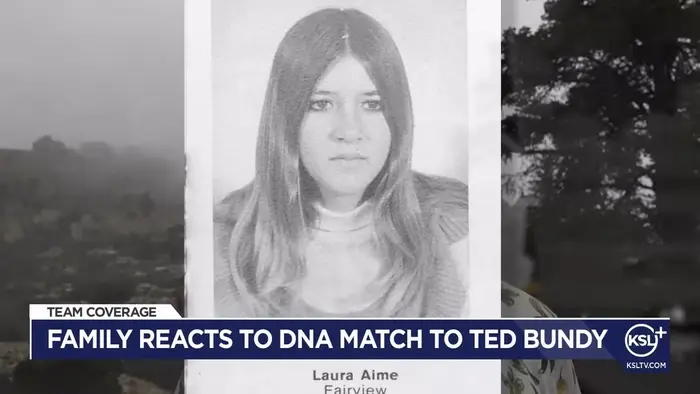
1.Earlier this month, investigators finally confirmed that Ted Bundy was responsible for the 1974 murder of 17-year-old Laura Ann Aime in Utah — a case that had remained unsolved for more than five decades.
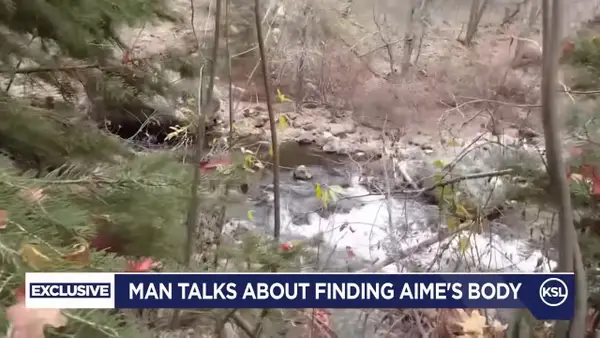
On Halloween night in 1974, Aime attended a party before reportedly leaving and heading toward a nearby convenience store. Tragically, she never returned home. Weeks later, her body was discovered in American Fork Canyon, and the brutal nature of the crime shocked the local community.
At the time, investigators had very little evidence to work with, and despite years of effort, the case remained a mystery. It wasn’t until advances in DNA technology decades later that authorities were finally able to connect Bundy to the crime and officially identify him as the killer.
What makes this case especially unsettling is the reminder that some victims and families wait generations for answers. Even after more than 50 years, modern forensic science was still uncovering the truth about a crime that had long seemed destined to remain unsolved forever.
KSL News Utah / Via youtube.com
2.You Might Forget Most of Your Life
Many of your memories will fade over time, leaving only fragments of what actually happened.
- Fox 11 Los Angeles / Via youtube.com
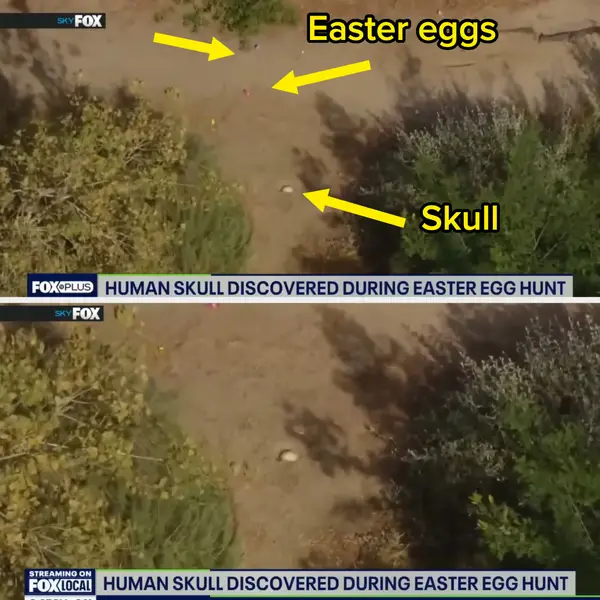
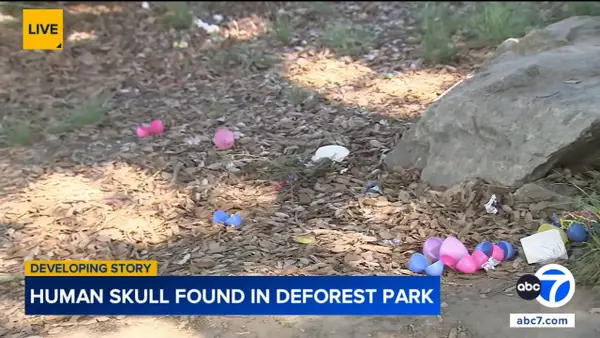
2. What started as a normal family outing over Easter weekend turned into something no one could have imagined.
Families gathered at DeForest Park in Long Beach, California, for an Easter egg hunt when one child made a horrifying discovery along a trail. What initially appeared to be an unusual object turned out to be a human skull partially buried in the ground.
Authorities quickly secured the area and launched an investigation. In the days that followed, forensic anthropology specialists carefully searched the location and recovered what officials described as a skeletonized human skull and jawbone.
The discovery transformed an ordinary holiday event into an active forensic investigation. Homicide detectives were called to the scene, while experts began examining the remains in an effort to determine the person’s identity, age, and cause of death.
What makes the story especially unsettling is how unexpectedly it unfolded. A routine childhood activity in a public park suddenly became the starting point for a mystery involving human remains, with many questions still unanswered as investigators continue their work.
ABC7 / Via youtube.com
3.Silence Can Be Louder Than Noise
Some of the most uncomfortable situations come from complete silence, not chaos.

- NCEMC / Via missingkids.org
3.In February 1985, Cherrie Mahan disappeared under circumstances that remain deeply unsettling decades later.
The 8-year-old was last seen in rural Pennsylvania after getting off her school bus near the end of the quiet road where she lived. Like countless days before, she began the short walk toward her family’s farmhouse — a familiar route she knew by heart.
But this time, she never made it home.
When her mother returned later that day, Cherrie was nowhere to be found. Despite immediate concern and extensive searches, there were no obvious signs of a struggle, no clear trail to follow, and very little physical evidence for investigators to work with.
The disappearance quickly became one of Pennsylvania’s most well-known missing-child cases. Over the years, countless tips, theories, and leads have emerged, but none have provided definitive answers about what happened to her.
What makes the case especially disturbing is its simplicity. Cherrie vanished during a routine walk that lasted only a few minutes and took place just a short distance from her home. Decades later, the mystery remains unsolved, leaving behind more questions than answers.

WTAE-TV Pittsburgh / Via youtube.com
As investigators worked to reconstruct the events surrounding Cherrie Mahan’s disappearance, witness statements revealed a chilling clue that would become central to the case.
Several people reported seeing a suspicious blue van in the area around the time Cherrie vanished. What made the vehicle especially memorable was a distinctive mural of a skier painted on its side — an unusual detail that stood out to witnesses and immediately caught investigators’ attention.
Authorities widely publicized descriptions of the van, hoping someone would recognize it and come forward with information. Over the years, the image of the blue van with the skier graphic became one of the most recognizable symbols associated with Cherrie’s disappearance.
Despite decades of investigation, countless tips, and ongoing public interest, neither the van nor its possible connection to the case has ever been fully explained. The mystery surrounding the vehicle remains one of the most unsettling aspects of a disappearance that continues to haunt investigators and Cherrie’s family to this day.

- WTAE-TV Pittsburgh / Via youtube.com
4.Your Online Data Never Truly Disappears
Even if you delete something, there’s a high chance it still exists somewhere.

Frank Micelotta Archive / Getty Images
4. This week’s death-anniversary spotlight focuses on Layne Staley, the iconic frontman of Alice in Chains.
Staley died on April 5, 2002, at the age of 34 from a drug overdose inside his Seattle condominium. Tragically, because he had become increasingly isolated from the outside world, his death went unnoticed for nearly two weeks. His body was not discovered until April 19, 2002.
In the years leading up to his death, Staley had largely withdrawn from public life while struggling with severe addiction. Friends, family members, and former bandmates had reportedly become concerned about his well-being as he spent more and more time alone and had less contact with those around him.
What many people find especially heartbreaking about the story is not only the loss of a talented musician, but the fact that someone so influential and admired spent his final days in complete isolation. The circumstances surrounding his death have since become one of the most tragic and often-discussed stories in rock music history, serving as a sobering reminder of the devastating impact addiction can have on even the most successful people.

- Steve Eichner / Getty Images
Staley’s final years were marked by a heartbreaking decline that many of those closest to him struggled to stop. Although Alice in Chains briefly reunited in the late 1990s, Layne Staley appeared less and less in public, and by the early 2000s had become largely isolated from the outside world.
According to reports from friends and associates, Staley spent much of his time alone inside his Seattle condominium, often watching television, listening to music, or playing video games while battling severe addiction. As his struggles intensified, contact with friends and family became increasingly infrequent.
In the days leading up to his death, that isolation reportedly grew even deeper. Communication became almost nonexistent, and the unusual silence eventually caused concern among those who knew him. Sadly, those fears were later confirmed when authorities discovered that Staley had died alone, nearly two weeks earlier.
What many people find especially disturbing about the story is how someone who once stood in front of thousands of fans ended up spending his final days in near-complete solitude. His death remains one of rock music’s most tragic reminders of how addiction and isolation can quietly consume even the most successful and beloved artists.

- Ethan Miller / Getty Images
5.People Often Hide Their True Thoughts
Not everyone says what they really feel—sometimes the truth is never spoken.
Washington State Department of Corrections / Via en.wikipedia.org
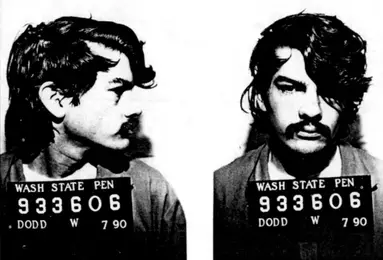
5. The final story involves American serial killer Westley Allan Dodd, whose crimes shocked the United States in 1989.
Dodd was responsible for the murders of three young boys in Washington state. While the crimes themselves horrified investigators and the public, what many found even more disturbing was the level of planning and self-awareness revealed after his arrest.
Among the evidence discovered was a detailed personal journal in which Dodd openly documented his violent thoughts, fantasies, and intentions. According to investigators, he wrote extensively about his urges and described them with alarming clarity, providing an unusually direct look into the mindset of a serial offender.
The journal later became a significant piece of evidence in the case, helping authorities understand the extent of his planning and the dangers he posed. For many people who later learned about the case, the most unsettling aspect was not only the crimes themselves, but the fact that the warning signs had been written down so openly.
The case remains one of the most disturbing examples of how criminal investigations can sometimes uncover written records that reveal the calculated thinking behind horrific acts, offering a chilling glimpse into a reality most people struggle to comprehend.
- KXLY / Via youtube.com
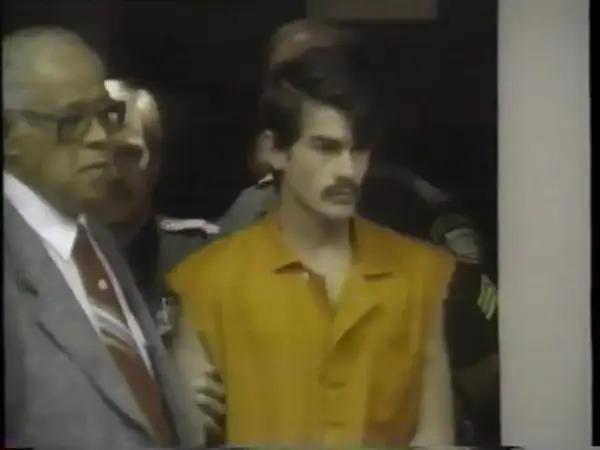
Dodd’s crimes finally came to an end when a witness reportedly saw him attempting to abduct another child and immediately alerted authorities. The quick action led to his arrest before another potential victim could be harmed.
Once in custody, Westley Allan Dodd confessed not only to the murders for which he was being investigated, but also to a lengthy history of violent thoughts and behavior. Investigators were particularly disturbed by the level of detail in his admissions and personal writings.
Perhaps the most chilling aspect of the case was Dodd’s own acknowledgment of the danger he posed. According to records from the investigation, he openly stated that he believed he would commit more murders if he were ever released.
For many people who have studied the case, that admission remains one of its most unsettling elements. Unlike many criminals who deny responsibility or attempt to minimize their actions, Dodd openly recognized the threat he represented, making the case a particularly disturbing chapter in American criminal history.

KXLY / Via youtube.com
Unlike many convicted killers, Westley Allan Dodd did not spend years challenging his conviction or attempting to delay his sentence. Instead, he accepted responsibility for his crimes and reportedly requested that his execution be carried out as quickly as possible.
On January 5, 1993, Dodd was executed at the Washington State Penitentiary. His execution drew national attention because it was carried out by hanging, making him the first person in the United States to be legally executed by that method in decades.
The case remains disturbing not only because of the crimes themselves, but also because of Dodd’s unusual response after his arrest. His confessions, journals, and willingness to accept his sentence created a criminal case unlike many others, leaving investigators and the public with a chilling record of a man who openly acknowledged both his actions and the danger he believed he posed.
For many people, the story serves as a stark reminder of how deeply unsettling some real-life criminal cases can be—not just because of what happened, but because of the rare glimpse they provide into the mindset of those responsible.

- KXLY / Via youtube.com
WHY THIS HITS HARD
These facts aren’t just interesting—they challenge the way we think. They remind us that reality, memory, and perception aren’t as simple as they seem.