HIGHLIGHTS
- Common signs of emotionally unhealthy relationships
- Why toxic dynamics are difficult to recognize early
- Red flags many people normalize for too long
- The emotional impact of staying in unhealthy situations

There’s no class in high school that teaches you how to be a good boyfriend or girlfriend. We learn the biology of sex, the legal side of marriage, and maybe read a few old love stories — but nobody really teaches us how to build a healthy relationship, communicate properly, or avoid becoming toxic to someone we love.
There’s no class in high school that teaches you how to be a good boyfriend or girlfriend. We learn the biology of sex, the legal side of marriage, and maybe read a few old love stories — but nobody really teaches us how to build a healthy relationship, communicate properly, or avoid becoming toxic to someone we love.
There’s no class in high school that teaches you how to be a healthy partner. We’re taught the biology of sex, the rules of marriage, and forced to read outdated love stories — but nobody teaches us how to communicate, handle emotions, build trust, or avoid becoming toxic in a relationship.
Men and women are often taught to objectify each other — and even their relationships. As a result, many people start seeing their partners as trophies, status symbols, or personal achievements instead of human beings deserving of love, respect, and emotional support.
The self-help advice out there usually doesn’t help much either. And for most people, their parents weren’t exactly great role models when it came to building healthy relationships.
What Is a Toxic Relationship?
Many of us step into relationships without realizing that the beliefs we’ve grown up with about love and dating are already toxic. We carry unhealthy expectations, bad communication habits, and emotional insecurities without even noticing them. So before anything else, let’s understand what a toxic relationship actually is:
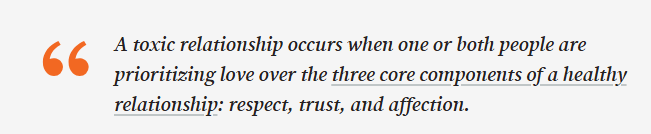
This may sound harsh, but love alone is not enough to keep a relationship healthy. In fact, love can sometimes blind people to the things that matter even more — like respect, trust, honesty, and emotional support.
If you value love more than respect, you’ll start accepting disrespect and poor treatment. If you choose love over trust, you’ll tolerate lies, betrayal, and cheating. And if you hold onto love while ignoring affection and emotional connection, you may end up stuck in a cold, lonely relationship.
People stay in toxic relationships for many reasons — low self-esteem, fear of being alone, emotional dependency, or simply not realizing how unhealthy things have become. But ignoring these problems only creates a relationship that is emotionally draining, mentally unhealthy, and sometimes even abusive.

6 Signs of a Toxic Relationship You Might Think Are Normal
Toxic relationships can show up in many different ways, but there are some clear warning signs that people often ignore — or even mistake for love and commitment.
Many unhealthy behaviors are so normalized that couples start believing they’re part of a “healthy” relationship, when in reality, they slowly damage trust, emotional stability, and genuine connection.
Here are six common relationship habits that may seem normal on the surface but are actually toxic behaviors that can quietly destroy the relationship over time.
1. The Relationship Scorecard
What Is It?: The “keeping score” phenomenon is when someone you’re dating continues to blame you for past mistakes. If both people in the relationship do this it devolves into what I call “the relationship scorecard,” where the relationship devolves into a battle to see who has screwed up the most over the months or years, and therefore who is most indebted to the other.

Maybe you messed up years ago and your partner still brings it up every chance they get. And maybe you caught them doing something suspicious, so now both of you keep using past mistakes as weapons against each other.
This is one of the clearest signs of a toxic relationship: keeping score.
Instead of resolving problems, forgiving, and moving forward, both partners stay trapped in a cycle of blame, guilt, and emotional revenge. Old mistakes become ammunition in every argument, turning the relationship into a battlefield where nobody truly wins.
Healthy relationships focus on growth and communication. Toxic relationships keep dragging the past into the present until resentment becomes stronger than love.
Wrong.
Why It’s Toxic: Keeping score in a relationship is toxic in two ways. First, it avoids solving the actual problem by dragging old mistakes into every new argument. Second, it uses past guilt and resentment to emotionally manipulate the other person in the present.
When this pattern continues for too long, the relationship turns into a constant competition over who is “less wrong.” Instead of working together to solve problems, both partners become obsessed with defending themselves and proving the other person is worse.
People stop trying to be better for each other — and start trying to blame each other less.
- What Healthy Couples Do Instead
Healthy relationships deal with problems one at a time unless they’re genuinely connected. If someone repeatedly lies or cheats, then yes, that’s a serious recurring issue. But bringing up unrelated mistakes from years ago during every argument only creates bitterness and emotional exhaustion.
A strong relationship requires forgiveness, accountability, and closure. If something deeply hurt you in the past, it should have been addressed properly back then — not stored away as ammunition for future fights.
Choosing to stay with someone means accepting both who they are now and the mistakes they’ve made before. If you keep punishing your partner for things you supposedly forgave, then the relationship never truly moves forward.
2. Dropping “Hints” and Other Passive-Aggression
What Is It?:Instead of communicating openly and honestly, one partner expects the other to “just figure it out.” Rather than clearly expressing what’s bothering them, they use indirect behavior, sarcasm, silence, or petty actions to frustrate their partner — and then use that frustration as an excuse to complain or start an argument.
This kind of passive-aggressive behavior slowly destroys communication in a relationship. It creates confusion, resentment, and emotional distance because neither person is dealing with the real issue directly.
Healthy relationships are built on clarity, honesty, and emotional maturity — not mind games, hints, or punishment disguised as silence.
Why It’s Toxic: Passive-aggressive behavior is usually a sign that open and honest communication doesn’t feel safe in the relationship. When someone feels uncomfortable expressing anger, disappointment, or insecurity directly, they start relying on silence, hints, sarcasm, or indirect actions instead.
A person who feels emotionally safe has no need to play mind games or expect their partner to read between the lines. They can simply say what they feel without fear of being ignored, judged, or attacked.
In healthy relationships, communication is clear and direct. People express problems openly instead of hiding them behind attitude, mixed signals, or emotional manipulation.
What To Do Instead: Be honest about your feelings, needs, and expectations. Speak clearly instead of expecting your partner to guess what’s wrong. At the same time, understand that your emotions are your responsibility — not something your partner is automatically obligated to fix.
What truly matters is support. A healthy partner may not solve every problem for you, but they’ll listen, understand, and stand beside you when it matters. And when there’s real love and emotional maturity in a relationship, that support usually comes naturally.
3. Holding the Relationship Hostage

What Is It?:This is emotional manipulation disguised as communication. Instead of calmly expressing a concern or hurt feeling, one partner turns every issue into a threat against the entire relationship.
Rather than saying, “I feel hurt by your behavior,” they jump to statements like, “Maybe we shouldn’t be together,” or “I can’t be with someone like you.”
This creates fear, pressure, and insecurity instead of understanding. The relationship starts feeling like a constant ultimatum where small problems suddenly become threats of breakup or abandonment.
Healthy communication focuses on solving the issue — not using the relationship itself as leverage to control the other person emotionally.
Why It’s Toxic: Using the relationship itself as a threat is a form of emotional blackmail. It turns small disagreements into major relationship crises and fills the relationship with unnecessary drama, fear, and emotional instability.
When every conflict sounds like a possible breakup, both partners stop feeling emotionally safe. Instead of speaking honestly, they begin hiding their real thoughts and feelings to avoid triggering another fight or threat.
A healthy relationship allows both people to express anger, disappointment, frustration, or insecurity without fearing that the entire relationship is about to collapse. That emotional safety is what builds trust.
Without it, communication becomes controlled by fear, honesty disappears, and the relationship slowly turns into a cycle of manipulation, silence, and resentment.
What To Do Instead: It’s fine to get upset at your partner or to not like something about them—that’s called being a normal human being. But understand that committing to a person and always liking a person are not the same thing. You can be committed to someone and not like everything about them. You can be eternally devoted to someone yet actually be annoyed or angered by them once in a while. On the contrary, two partners who are capable of communicating feedback and criticism without judgment or blackmail will strengthen their commitment to one another in the long run.
4. Blaming Your Partner for Your Own Emotions
What Is It?:Imagine you’ve had a terrible day, and your partner doesn’t respond the way you expected. Maybe they were busy with work calls, distracted, or still planning to go out with friends instead of staying home with you.
Instead of clearly asking for comfort or support, frustration starts building inside you. Eventually, you lash out and accuse them of being insensitive or uncaring — even though you never actually communicated what you needed.
This is where unhealthy expectations begin. Many people expect their partner to magically understand their emotions without any honest conversation. They believe love should automatically mean mind-reading.
But healthy relationships don’t work on assumptions. Your partner cannot fully understand your emotional needs unless you communicate them openly. Expecting someone to instinctively drop everything and fix your mood without being told only creates resentment, disappointment, and unnecessary conflict.
Why It’s Toxic:Blaming our partners for our emotions is selfish and a classic example of the poor maintenance of personal boundaries. When you set a precedent that your partner is responsible for how you feel at all times (and vice-versa), this can easily lead to a codependent relationship. Everything—even down to reading a book or watching TV—must be negotiated. When someone begins to get upset, all personal desires go out the window because now you have to make each other feel better.
The biggest problem about codependent tendencies is that they breed resentment. Sure, if my girlfriend gets mad at me once in a while because she’s had a shitty day and is frustrated and needs attention, that’s understandable. But if it becomes an expectation that my life revolves around her emotional well-being at all times, then I’m soon going to become very bitter and even manipulative towards her feelings and desires.
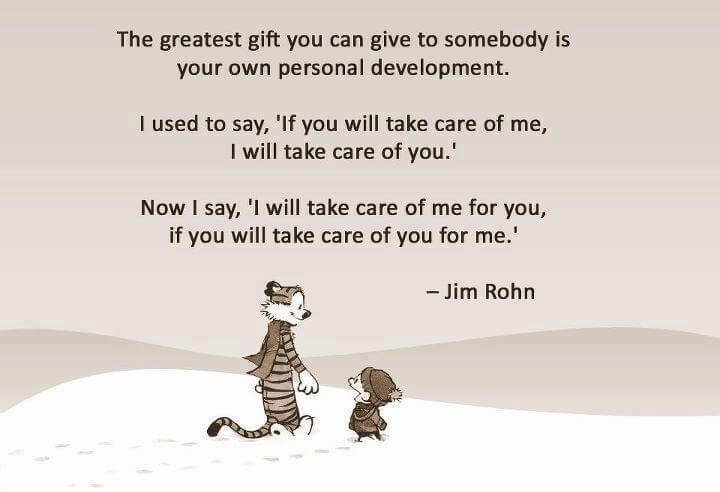
What To Do Instead:Take responsibility for your own emotions instead of making your partner responsible for fixing every bad mood, frustration, or emotional struggle. A healthy relationship is built on support — not emotional dependency.
There’s a big difference between a partner choosing to support you and feeling forced or obligated to manage your emotions. Real care comes from willingness, not pressure.
When two people become responsible for each other’s emotional stability all the time, the relationship slowly becomes exhausting. People start hiding their true feelings, expecting mind-reading, or using guilt and manipulation to get attention and reassurance.
Healthy couples support each other without losing personal emotional responsibility. They communicate their needs clearly, respect each other’s boundaries, and help one another out of love — not emotional obligation.
5. Displays of “Loving” Jealousy
What Is It?:Extreme jealousy and controlling behavior are major signs of a toxic relationship. When someone becomes angry every time their partner interacts with another person, it often comes from insecurity, lack of trust, and fear of losing control.
Instead of communicating those insecurities in a healthy way, the person tries to control their partner’s behavior — questioning who they talk to, checking their phone, invading privacy, monitoring messages, or constantly demanding reassurance.
Over time, this behavior becomes emotionally exhausting and damaging. Privacy disappears, trust breaks down, and the relationship starts feeling more like surveillance than love.
Healthy relationships are built on trust, respect, and personal freedom. Love should never require controlling someone’s life, invading their privacy, or treating them like they’re guilty without proof.
Why It’s Toxic:Some people wrongly believe that jealousy is proof of love — as if constant suspicion and possessiveness somehow mean their partner cares more. But that mindset is deeply unhealthy.
Extreme jealousy is not affection. It’s usually a sign of insecurity, control, and lack of trust. When someone constantly monitors or doubts their partner, they create unnecessary tension, drama, and emotional pressure in the relationship.
More importantly, it can feel insulting and degrading. If your partner cannot trust you to interact with other people without assuming the worst, it sends a damaging message: either they believe you’re dishonest, or they think you lack self-control and maturity.
A healthy relationship cannot survive without trust. Love without trust quickly turns into control, anxiety, and emotional exhaustion.
What To Do Instead:Trust is one of the foundations of a healthy relationship. Yes, a little jealousy can be natural sometimes, but when jealousy becomes controlling, obsessive, or constant, it usually reflects personal insecurity — not love.
Trying to control your partner because of your own fears only damages the relationship over time. It creates pressure, emotional distance, and resentment instead of closeness and security.
A strong relationship requires trust, freedom, and emotional confidence. If you constantly project your insecurities onto your partner, you’ll eventually push them away instead of bringing them closer.
Healthy love is built on trust, not surveillance.
6. Buying the Solutions to Relationship Problems

What Is It?: One of the biggest signs of a toxic relationship is avoiding real problems by distracting yourselves with temporary pleasures. Instead of dealing with conflict honestly, couples try to cover it up with gifts, expensive dinners, vacations, or romantic gestures.
For a short time, those things may create excitement and make everything feel “better.” But the actual issue never gets solved — it only gets buried under distractions and emotions.
Healthy relationships face problems directly through communication, accountability, and understanding. Toxic relationships escape from problems instead of fixing them, which causes unresolved resentment to grow beneath the surface.
Some couples become so focused on avoiding conflict that they use temporary pleasures to hide deeper problems. Gifts, vacations, fancy dinners, or constant excitement may create the illusion that everything is fine — but unresolved issues don’t disappear just because they’re being ignored.

Over time, this creates a relationship built on distraction instead of honesty. The real problems stay buried beneath the surface, quietly growing stronger while both people pretend everything is okay.
No amount of luxury, romance, or entertainment can replace honest communication and emotional accountability. If serious issues are never faced directly, the relationship slowly weakens from the inside out.
Why It’s Toxic:Using gifts, money, or expensive experiences to avoid relationship problems doesn’t solve anything — it only hides the issue temporarily. And when this pattern repeats, it creates an unhealthy dynamic where emotional problems are replaced with material distractions.
For example, if someone hurts their partner and instead of taking responsibility they simply buy gifts or plan fancy outings, the real issue never gets addressed. Over time, one person may start feeling emotionally ignored, while the other begins treating money or gestures as a substitute for accountability and communication.
The result is emotional disconnection. One partner feels unheard and resentful, while the other feels emotionally drained and reduced to “fixing” problems without truly understanding them.
Healthy relationships are repaired through honest conversations, responsibility, empathy, and changed behavior — not through distractions or temporary excitement.
What To Do Instead:Deal with the problem. Trust was broken? Talk about what it will take to rebuild it. Someone feels ignored or unappreciated? Talk about ways to restore those feelings of appreciation. Communicate!
There’s nothing wrong with doing nice things for a significant other after a fight to show solidarity,regret, or to reaffirm the commitment. But one should never use gifts or fancy things to replace dealing with the underlying emotional issues. Gifts and trips are called luxuries for a reason—you only get to appreciate them when everything else is already good. If you use them to cover up your problems, then you will find yourself with a much bigger problem down the line.
How to Turn a Toxic Relationship Into a Healthy Relationship
A toxic relationship is not just a temporary rough phase or a few occasional arguments. It’s a repeated pattern where unhealthy behaviors constantly overpower important foundations like respect, trust, honesty, emotional safety, and genuine affection.
When love becomes the only reason people stay together, they often begin tolerating manipulation, disrespect, control, and emotional pain that slowly destroys the relationship from within.
Changing these patterns is difficult — and the truth is, many couples never fully do. Real change requires brutal honesty, emotional maturity, accountability, and consistent effort from both people. One person alone cannot fix a toxic relationship.
But change is still possible. If both partners are genuinely willing to recognize the unhealthy patterns, take responsibility for their behavior, and work toward healthier communication and trust, the relationship has a chance to become stronger and healthier over time.
01
A toxic relationship can only improve when both people are genuinely willing to change. Not one person trying while the other stays defensive, careless, or emotionally unavailable. Real progress requires effort, accountability, and honesty from both sides.
If one partner refuses to acknowledge the problems or has no real interest in improving the relationship, then the answer is already clear. No amount of love, patience, or sacrifice from one person can repair a relationship alone.
But if both partners are truly committed to fixing the unhealthy patterns, communicating better, and changing their behavior consistently, then there’s at least a real chance for the relationship to heal and grow.
02
Wanting the relationship to improve is not enough — both partners also need to honestly recognize what’s actually broken. Whether it’s lack of trust, respect, affection, communication, or emotional safety, the real problem must be clearly acknowledged before anything can truly change.
And this is harder than most people think.
Sometimes one partner believes the main issue is trust, while the other feels emotionally disconnected and unloved. Sometimes people avoid admitting the real problem because it feels uncomfortable, embarrassing, or painful to say out loud.
But a relationship cannot heal if both people are pretending, avoiding honesty, or blaming surface-level issues while deeper problems remain hidden.
Real progress starts when both partners stop protecting their ego and start being brutally honest about what is making the relationship unhealthy. Only then can trust, respect, and emotional connection begin to rebuild.
Even if both people want to save the relationship and understand what the problem is, nothing will improve if every conversation turns into blame, attacks, or a battle over who is right.
Healthy communication means discussing problems without constantly judging, humiliating, or trying to “win” against each other. Because in a relationship, the moment both people become obsessed with proving who’s right, the relationship itself starts losing.
Fixing a toxic relationship requires emotional maturity from both sides. That means listening without becoming defensive, speaking honestly without cruelty, and focusing on solving the problem instead of attacking the person.
At the end of the day, a healthy relationship is not about winning arguments — it’s about protecting trust, respect, and connection even during difficult conversations.
Final Thoughts
A toxic relationship doesn’t become healthy overnight. It changes when both people stop avoiding the truth, stop blaming each other for everything, and start building trust, respect, honesty, and emotional safety together.
Love alone is never enough. Without communication, accountability, trust, and mutual respect, even the strongest feelings slowly turn into frustration and emotional exhaustion.
Sometimes the healthiest decision is to walk away. But if both partners are truly willing to grow, listen, change unhealthy habits, and face difficult conversations together, then even a damaged relationship can heal over time.
Healthy Relationship
| Healthy Relationship | Toxic Relationship |
|---|---|
| Honest communication | Passive-aggressive behavior |
| Trust and freedom | Jealousy and control |
| Solving problems together | Keeping score and blaming |
| Emotional support | Emotional manipulation |
| Respect during conflict | Threats and blackmail |
| Accountability | Avoiding real issues |
Remember:
A healthy relationship should bring peace, growth, trust, and emotional safety — not constant anxiety, fear, or exhaustion.
If you truly want to improve your relationship and build a stronger emotional connection, visit: