
HIGHLIGHTS
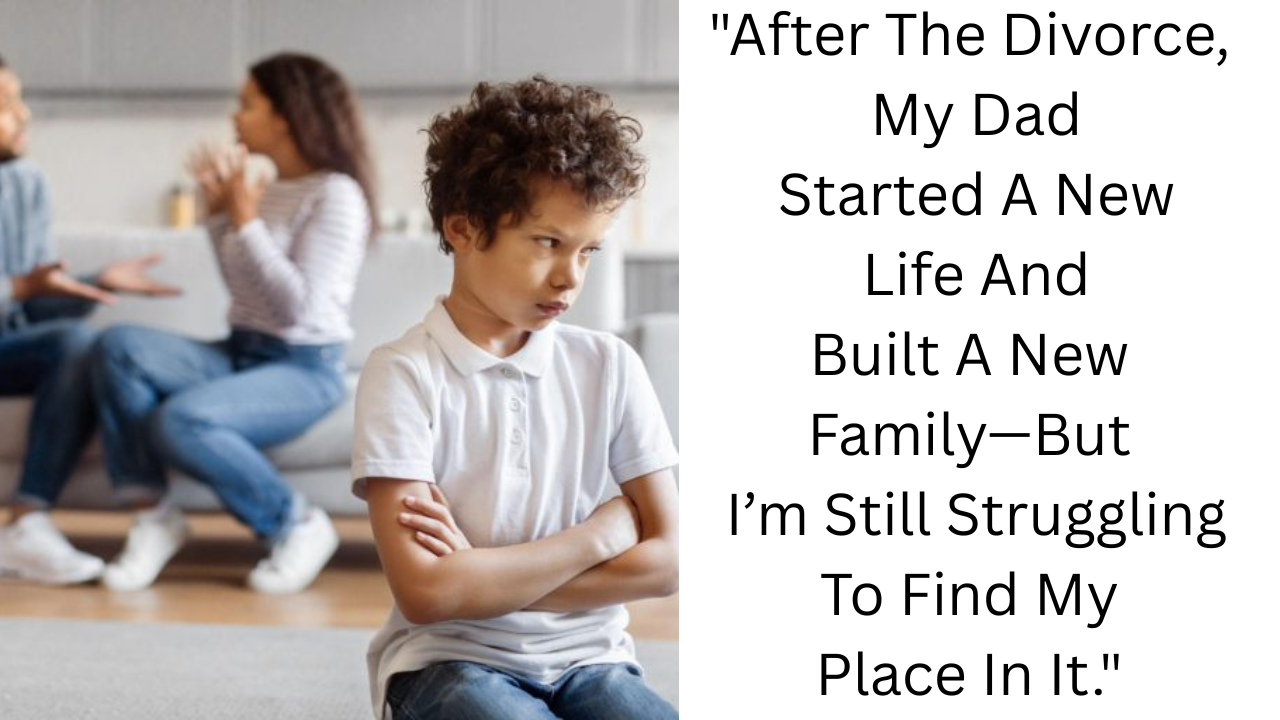
- A young person opens up about life after their parents’ divorce
- Watching a parent move on isn’t always easy
- Feelings of being replaced create emotional distance
- The story highlights the struggle between acceptance and pain
A heartfelt story about struggling to accept a parent’s new family after divorce and the emotional challenges that come with it.
Divorce doesn’t just separate two people—it reshapes an entire family. For many children, the hardest part isn’t the separation itself, but what comes after. Watching a parent move on, start a new relationship, and build a new life can feel like being pushed to the side. In this story, one person shares their emotional struggle with accepting their dad’s new family after the divorce. What makes it even more difficult is the feeling that everything has changed too quickly, leaving little room to process the pain. While the parent may see it as moving forward, the child often feels stuck, trying to understand where they fit in this new reality. These situations are more common than people realize, yet they’re rarely talked about openly. It’s not just about jealousy or resentment—it’s about loss, identity, and the fear of being replaced.

Two years ago my mom found out dad was cheating on her and he moved in with his affair partner and her kids. Both dad and the affair partner “Martha” were married. Martha has two young kids with her ex husband (supposedly) and dad has me (16f) and my brothers (20, 22 and 25).
My brother’s refused to have anything more to do with dad after the affair. But because I was 14 I didn’t get the choice. My parents divorce took over a year and my dad and Martha have been married for a little under a year already.

Martha’s ex husband doesn’t want anything to do with their kids. So they’re with Martha and dad all the time. I do what I can to be outside the house when it’s dad’s parenting time. He notices and complains but I told him I’m not playing happy family with his affair partner wife. Dad tells me not to call Martha that and Martha has yelled at me in the past few months for using that term because she’s afraid her kids will hear. I told them I don’t care and I don’t have respect for them.
I tell dad all the time he let me down and he destroyed our family and hurt us all. He says it shouldn’t hurt me and my brothers and that he doesn’t care if he hurts mom because she’s so boring that nobody should be stuck with her. I aways tell him I can’t wait for Martha to cheat on him.

Dad told me I have no right to talk that way to anyone and Martha has tried to be nice to me but I won’t even be civil with him. I told him if he wants a civil household he should let go of his parenting time. I told him I’m done at 18 regardless but he’s the one punishing Martha’s kids and Martha by forcing me to be here. He told me it doesn’t give me the right to say I don’t care about the wellbeing of a mom with two young kids.
Why Children Often Struggle After a Parent’s Affair
A parent’s affair often impacts more than just a marriage—it can deeply affect children as well. For many young people, their family represents stability, security, and trust. When an affair comes to light, that foundation can suddenly feel uncertain, leaving children struggling to understand what has happened and what it means for their future.
One of the most significant effects is a loss of emotional security. Children may begin to question whether the family they relied on will remain intact, leading to feelings of anxiety, confusion, and fear. Even when parents try to shield them from details, children are often sensitive to changes in household dynamics and can sense tension long before it is openly discussed.
Some children may also feel caught in the middle of the conflict. They might feel pressured to take sides, keep secrets, or act as emotional support for one parent. This can force them into roles that are far beyond what is appropriate for their age, placing a heavy emotional burden on them.
Behavioral changes are also common. Some children become withdrawn, while others may display anger, irritability, declining academic performance, or difficulties with friendships and relationships. Older children and teenagers may develop trust issues that influence how they view future romantic relationships.
The long-term impact varies from person to person. While some children eventually adapt and heal with support, others carry feelings of betrayal, insecurity, or mistrust well into adulthood. Their ability to recover often depends on how parents handle the situation, communicate with their children, and prioritize their emotional well-being during the aftermath.
Recognizing these challenges is important because healing begins with understanding. Honest communication, emotional support, consistency, and professional guidance when needed can help children process the experience and rebuild a sense of stability. While a parent’s affair can leave lasting emotional wounds, it does not have to define a child’s future or prevent them from developing healthy, trusting relationships later in life.
Can Family Relationships Heal After Divorce?
Healing after divorce is possible, but it usually takes time. Trust cannot be rebuilt through pressure or demands. Instead, it often requires accountability, patience, and consistent effort from everyone involved. While some families eventually find a healthier relationship, others choose to maintain distance in order to protect their emotional well-being. Every situation is different, and healing rarely follows a simple timeline.
Yes, family relationships can absolutely heal after divorce. While the original dynamic ends, families can build healthy new structures. Healing requires time, patience, and often professional guidance.
Understanding how relationships evolve and heal involves examining key areas of post-divorce life:
Lessons From This Story
1. A Parent’s Choices Can Affect the Entire Family
When a marriage ends because of betrayal, the emotional impact often extends beyond the couple involved. Children may struggle with feelings of disappointment, anger, and loss long after the divorce is finalized.
2. Healing Takes Different Amounts of Time for Everyone
Some people move forward quickly after a major life change, while others need much longer to process their emotions. There is no single timeline for healing after a family breakup.
3. Respect Cannot Be Forced
Healthy relationships are built on trust and mutual respect. When trust has been damaged, demanding respect often creates more resentment instead of bringing people closer together.
4. Children Need Time to Adjust to Family Changes
Introducing new partners, stepfamilies, and new living arrangements can be overwhelming. Patience and understanding are often more effective than pressure.
5. Acceptance and Forgiveness Are Not the Same Thing
Someone can eventually accept a situation without fully forgiving the actions that caused it. Acceptance is about finding peace, while forgiveness is a personal choice that cannot be forced.