


There’s a reason the blazer keeps showing up on every runway, every street style feed, and every “wardrobe essentials” list, season after season — no other single piece transforms an outfit as fast. Throw it over a plain white tee and jeans and suddenly the whole look reads intentional. Layer it over a slip dress and it turns romantic into razor-sharp. Button it over tailored trousers and it becomes instant boardroom polish. Learning how to style a blazer isn’t about mastering one look — it’s about understanding just how many different characters this one piece can play in your wardrobe.
This guide walks through exactly how to style a blazer across work, weekend, and evening settings, plus the fit and fabric details that separate a blazer that looks styled from one that just looks worn.
Table of Contents
Why the Blazer Is Worth the Investment
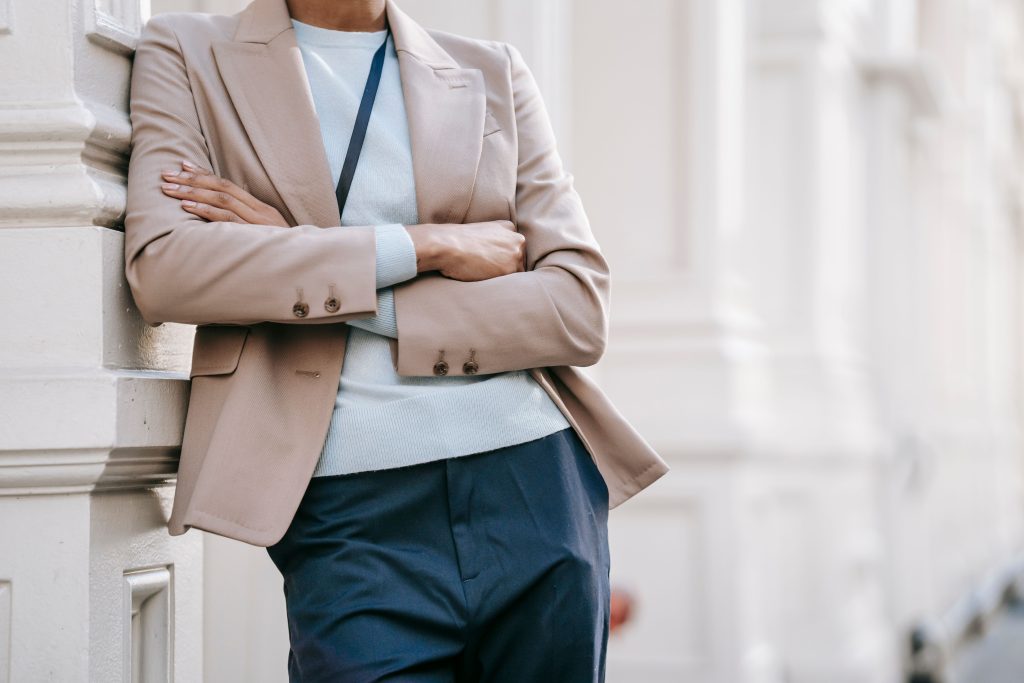
A blazer earns its place in a wardrobe because of how many different outfits it can anchor. Unlike trend-driven pieces that have a short shelf life, a well-made, well-fitting blazer works across seasons, occasions, and even years, provided it’s cared for properly. This versatility is exactly why it’s worth spending a bit more time getting the fit right, rather than treating it as an interchangeable, disposable piece.
Getting the Fit Right — This Matters More Than Style
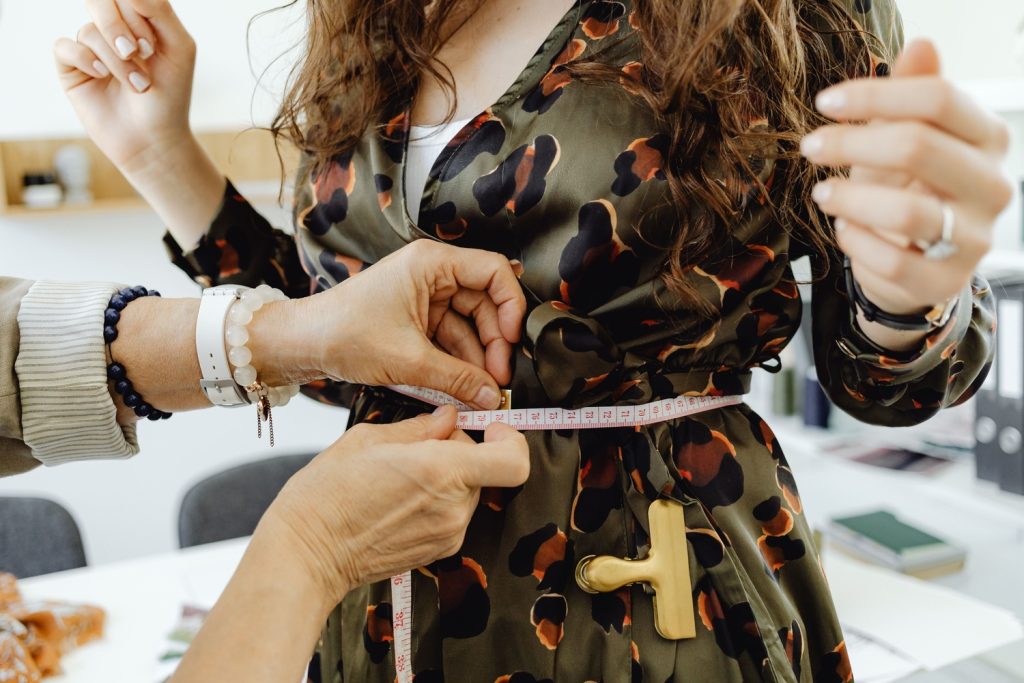
Before getting into how to style a blazer, it’s worth addressing fit, because an ill-fitting blazer undermines even the best outfit pairing.
Shoulders are the most important fit point. The shoulder seam should sit right at the edge of your natural shoulder — not hanging past it, and not pulling inward. Shoulder fit is also the hardest thing to alter, so it’s worth prioritizing this above almost anything else when trying one on.
Sleeve length should generally end near the wrist bone, allowing a small amount of shirt cuff to show if you’re wearing one underneath. Sleeves that are too long make the whole outfit look sloppy; sleeves that are too short create an awkward, outgrown appearance.
Length depends on your body proportions and the effect you’re going for, but a general guideline is that the blazer should cover the curve of your hips without extending much past them, which keeps the silhouette balanced rather than boxy or overly long.
Room through the chest and torso should allow you to move and, if needed, button it without pulling or gaping. A blazer that’s too tight across the back or chest looks strained no matter how good the styling is otherwise.
How to Style a Blazer for a Polished Work Look
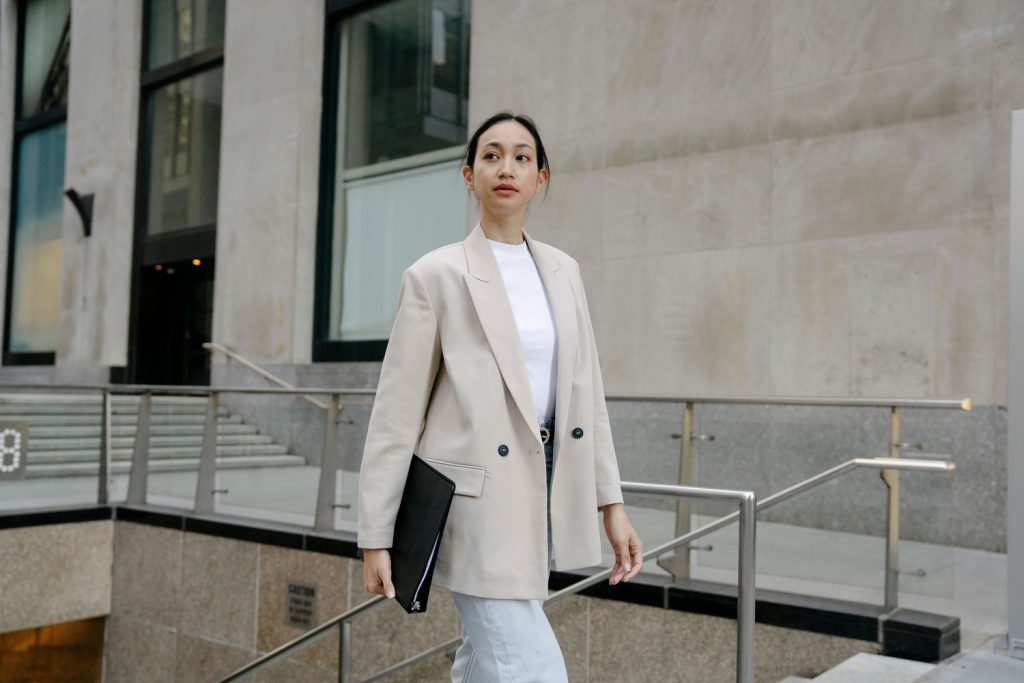
The most familiar use of a blazer is professional wear, but even within that context, there’s a real difference between an outfit that looks assigned and one that looks chosen.
Skip the matchy-matchy suit formula and go tonal instead — a charcoal blazer over black trousers, or camel over cream, creates a clean, elongated silhouette that reads more editorial than corporate-default. Underneath, keep it simple and let the blazer do the talking: a fitted button-down for a crisp finish, a fine-knit sweater for softness against the structure, or even a plain white tee for offices with a more relaxed dress code. The contrast between the sharp shoulder line of the blazer and something soft or minimal underneath is what makes the look feel current rather than stiff.
Finish with pointed flats, a loafer, or a slim heel, and a structured bag with clean lines — anything too slouchy undercuts the polish the blazer is doing all the work to create. Skipping the traditional shirt-and-tie formula entirely in favor of a blazer over a simple top is one of the fastest ways to make professional dressing feel current instead of costume-like.
How to Style a Blazer for Casual, Everyday Wear
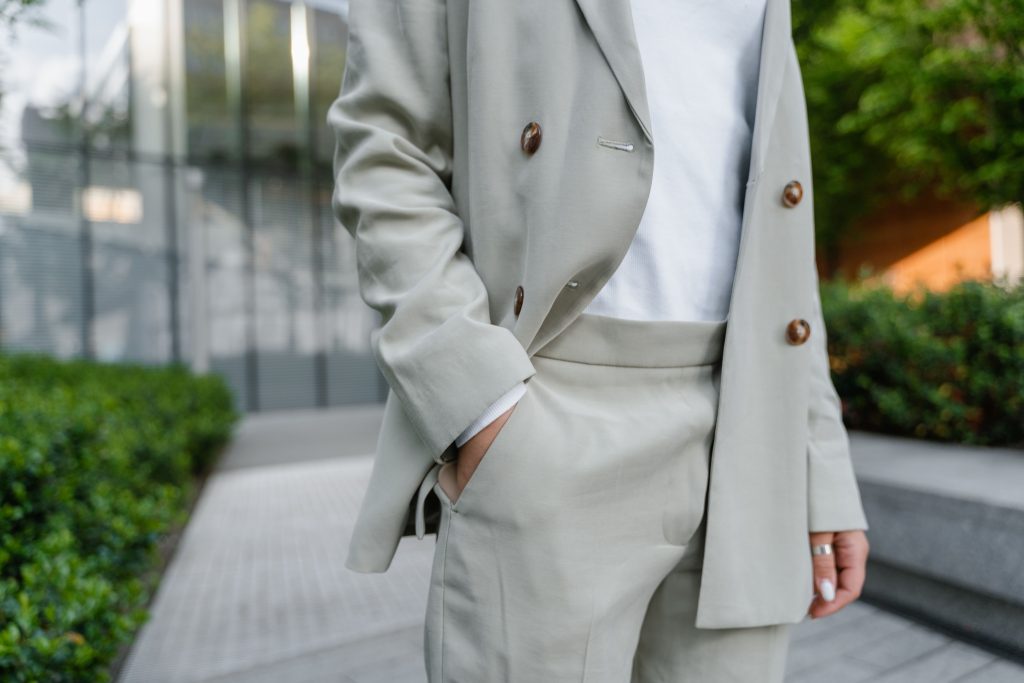
This is where a blazer earns its reputation as one of the most versatile pieces you can own — it works surprisingly well outside the office, and honestly, it’s where it looks the most effortlessly cool.
Blazer, straight-leg jeans, and a plain white tee is the closest thing fashion has to a foolproof formula. The sharp shoulder line against relaxed denim creates that “I didn’t try, but I did” look — add white sneakers or a loafer and you’ve got a weekend outfit that photographs like it took twenty minutes and actually took two.
Blazer over a slip dress or a simple knit dress adds shape and edge to a look that might otherwise feel too soft or shapeless, especially in transitional weather when a dress alone isn’t quite enough. This combination is a street-style favorite for a reason — it plays masculine tailoring against feminine silhouette, and that contrast is what makes it interesting.
Sleeves pushed up or rolled to the forearm instantly casualizes a blazer, signaling the outfit isn’t meant to be read as formal, even though the structure is still doing its job. Add this to an oversized blazer worn open over a bodysuit or fitted tank, and you get a slouchy-but-sharp combination that’s become a genuine street style staple.
Styling a Blazer for Evening or Dressier Occasions
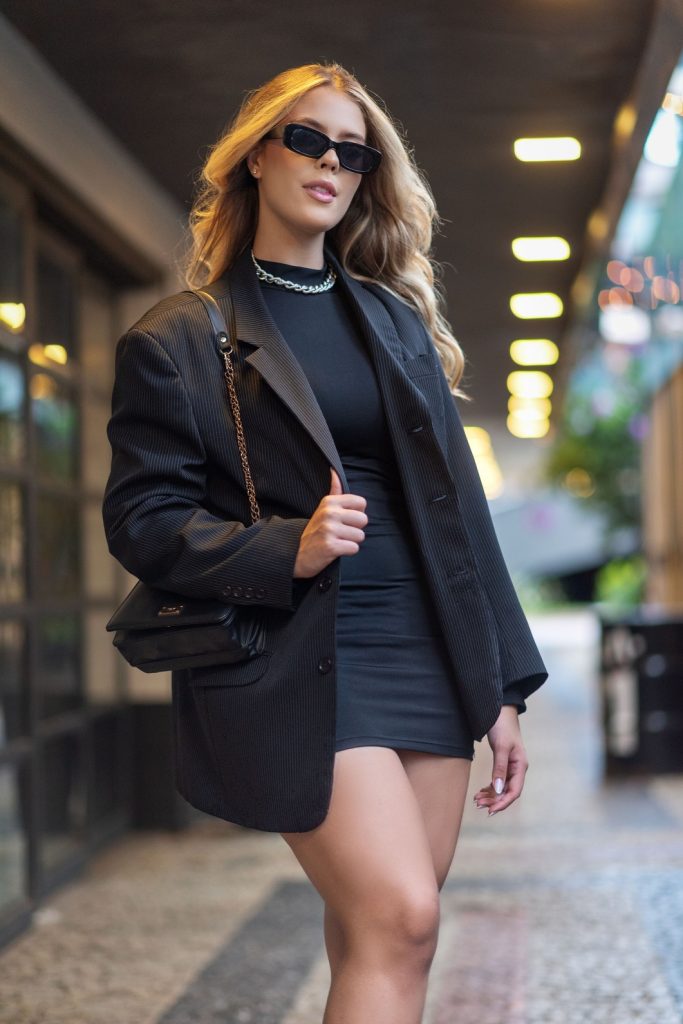
A blazer can also carry a dressier moment beautifully — worn correctly, it reads as far more interesting than “just wearing a jacket over an outfit.” Draped over a slip dress with nothing but skin and a delicate necklace showing underneath, a blazer adds structure and a touch of androgynous edge that feels far more current than a matched formal set. Left unbuttoned with the sleeves pushed slightly up and paired with a strappy heel, it walks the line between polished and undone in exactly the right way.
For evening specifically, fabric does a lot of the heavy lifting. A blazer with a subtle sheen, a fine wool crepe, or a touch of satin in the lapel instantly separates it from its daytime counterpart, even if the silhouette is nearly identical. Swap flats for heels, add a statement earring since the blazer’s clean lines leave room for it, and the same piece that anchored a work outfit that morning can carry you straight into evening.
Layering a Blazer Over Other Outerwear

A less obvious but effective styling trick is layering a blazer over a lightweight sweater or turtleneck during cooler months, rather than wearing it as a standalone top layer. This adds warmth without sacrificing the structured silhouette a blazer provides, and it works particularly well during transitional seasons when a heavier coat feels like too much but a blazer alone isn’t quite warm enough.
Choosing the Right Fabric and Color
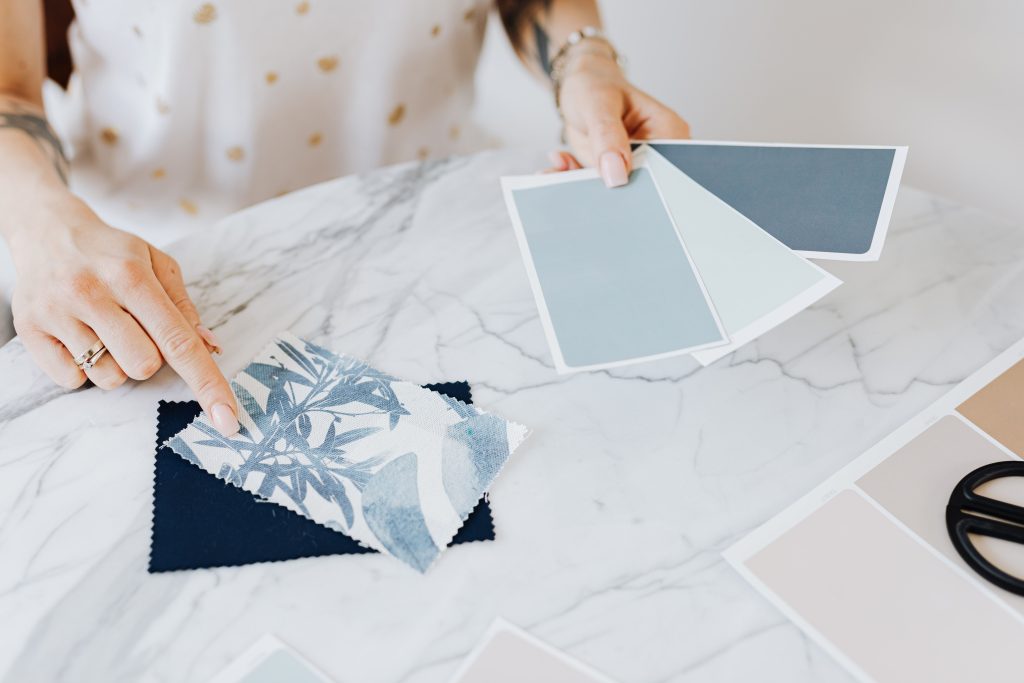
Neutral colors — black, navy, grey, camel — offer the most versatility, since they pair easily with the widest range of other pieces already in a typical wardrobe. If building toward a single, highly versatile blazer, a neutral tone is generally the safer, more cost-effective starting point.
Fabric weight matters more than people often consider. A midweight wool or wool-blend blazer works across the widest range of seasons and settings. Lighter fabrics (linen blends, lightweight cotton) suit warmer climates and more casual styling, while heavier wool suits colder months and more formal settings.
Texture can add interest without requiring a bold color. A subtle herringbone, a fine check, or a slightly textured weave adds visual depth to an otherwise simple neutral piece, which is a useful way to diversify a wardrobe without needing multiple blazers in different colors.
Common Blazer Styling Mistakes to Avoid

Sizing up for comfort. A blazer that’s too large loses the structured silhouette that makes it useful in the first place. If comfort is a concern, look for blazers with some stretch in the fabric rather than simply sizing up.
Treating it as only formal wear. As covered above, one of the biggest missed opportunities is limiting a blazer to strictly professional or formal contexts, when it’s actually one of the most adaptable pieces for casual styling too.
Ignoring proportion with the rest of the outfit. A boxy or oversized blazer paired with equally loose bottoms can create a shapeless overall silhouette. Balancing a more relaxed blazer with slightly more fitted bottoms (or vice versa) keeps the outfit looking intentional rather than accidental.
Neglecting basic care. Blazers, especially wool ones, hold their shape and look better over time with proper care — using a garment brush to remove lint and dust, hanging on a sturdy, shaped hanger, and avoiding excessive washing (dry cleaning or spot treatment is usually more appropriate) all help preserve the structure and finish that make a blazer look sharp.
Building a Blazer Into a Smaller, Smarter Wardrobe

Once you know how to style a blazer across this many different looks, it becomes a strong candidate for anyone trying to build a more intentional, versatile wardrobe rather than one filled with single-occasion pieces. A neutral, well-fitting blazer can move between work, casual outings, and dressier evenings with just a change of what’s worn underneath and how it’s styled — making it one of the more cost-effective pieces in terms of actual cost-per-wear over time.
Final Thoughts
A blazer’s real value isn’t in any single styling formula — it’s in how adaptable it becomes once you understand its range. From polished professional looks to relaxed weekend outfits to dressier evening wear, the same well-fitting blazer can support all of them with the right styling choices around it. Getting the fit right, choosing a versatile fabric and color, and being willing to style it outside strictly formal contexts is what turns a blazer from a single-purpose work jacket into one of the most genuinely useful pieces in an entire wardrobe.Once you understand how to style a blazer across these different settings, it becomes one of the most versatile pieces in your wardrobe.


2 thoughts on “How to Style a Blazer for Every Occasion: A Complete Guide”
Comments are closed.